 BokenJapan
Sights in Iki, Nagasaki
Iki · Nagasaki · 39 places
See
Kojima Shrine
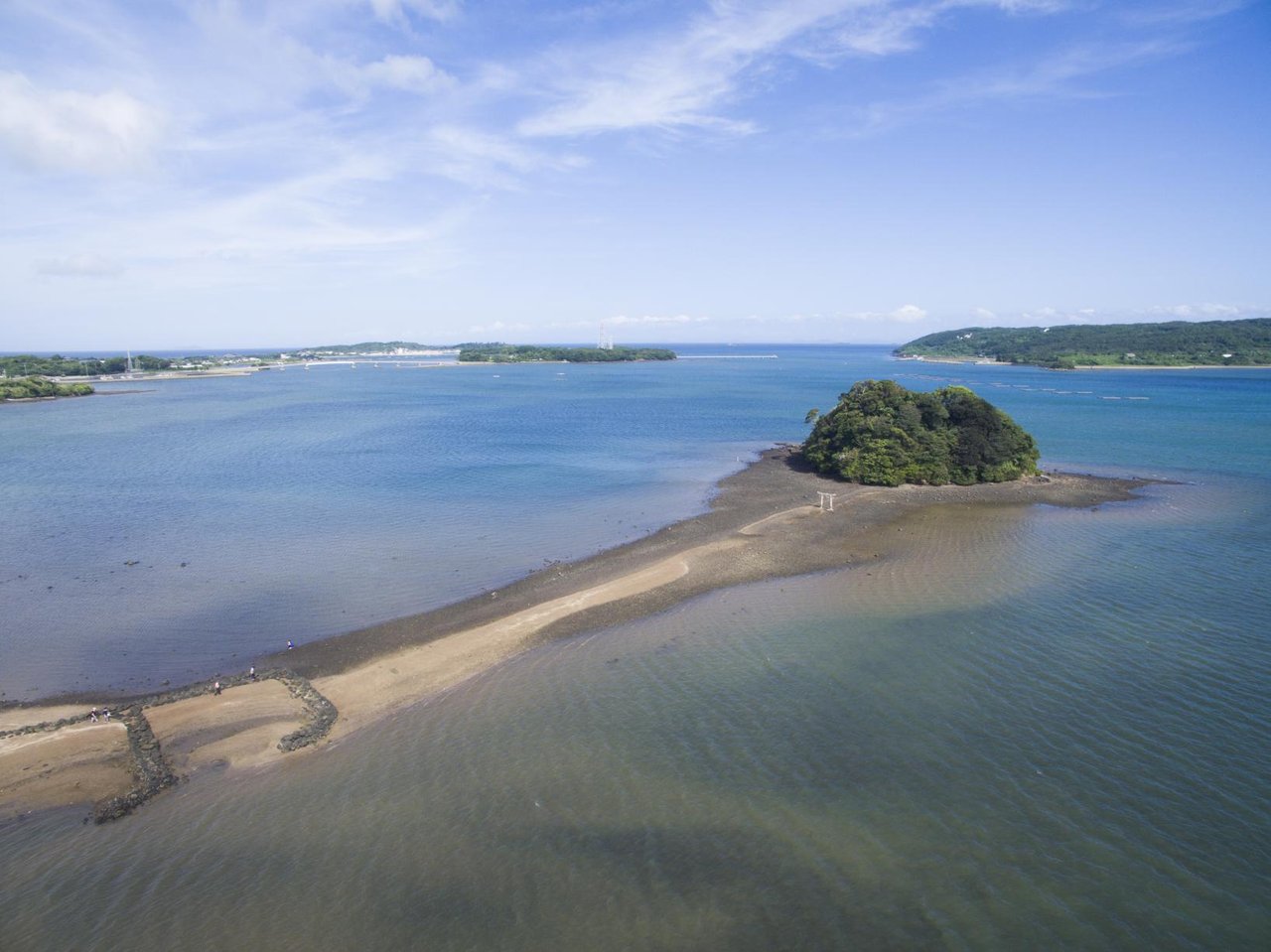
Island shrine reached on foot only around low tide, sometimes called the Mont Saint-Michel of Iki.
Harunotsuji Ruins
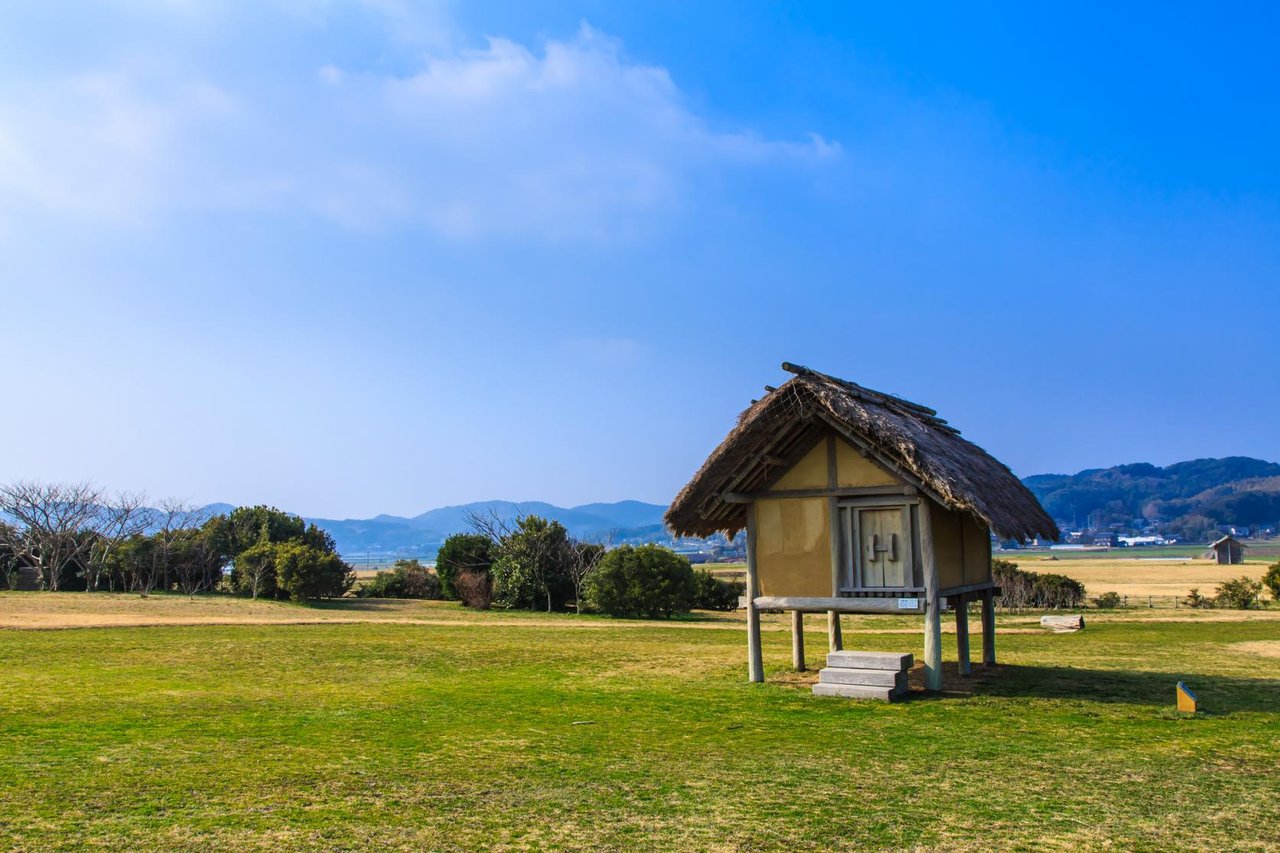
Large multiple-moat settlement identified as the capital of Iki-koku, about 1km square, from the Yayoi to early Kofun period.
Sakyo Cape
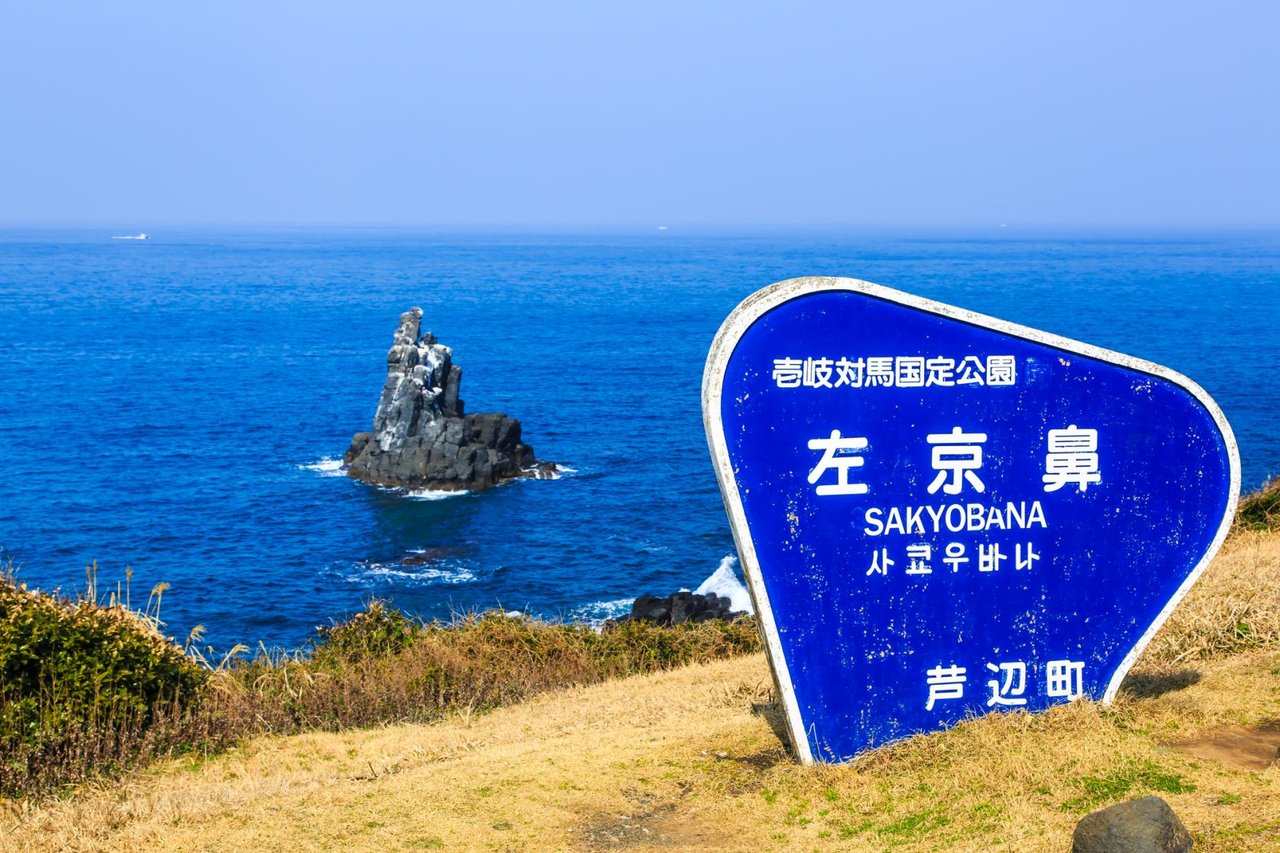
Scenic point at the tip of Yahata Peninsula, with about 1km of cliffs and columnar basalt rocks called Kannon Pillars.
Tsukuyomi Shrine
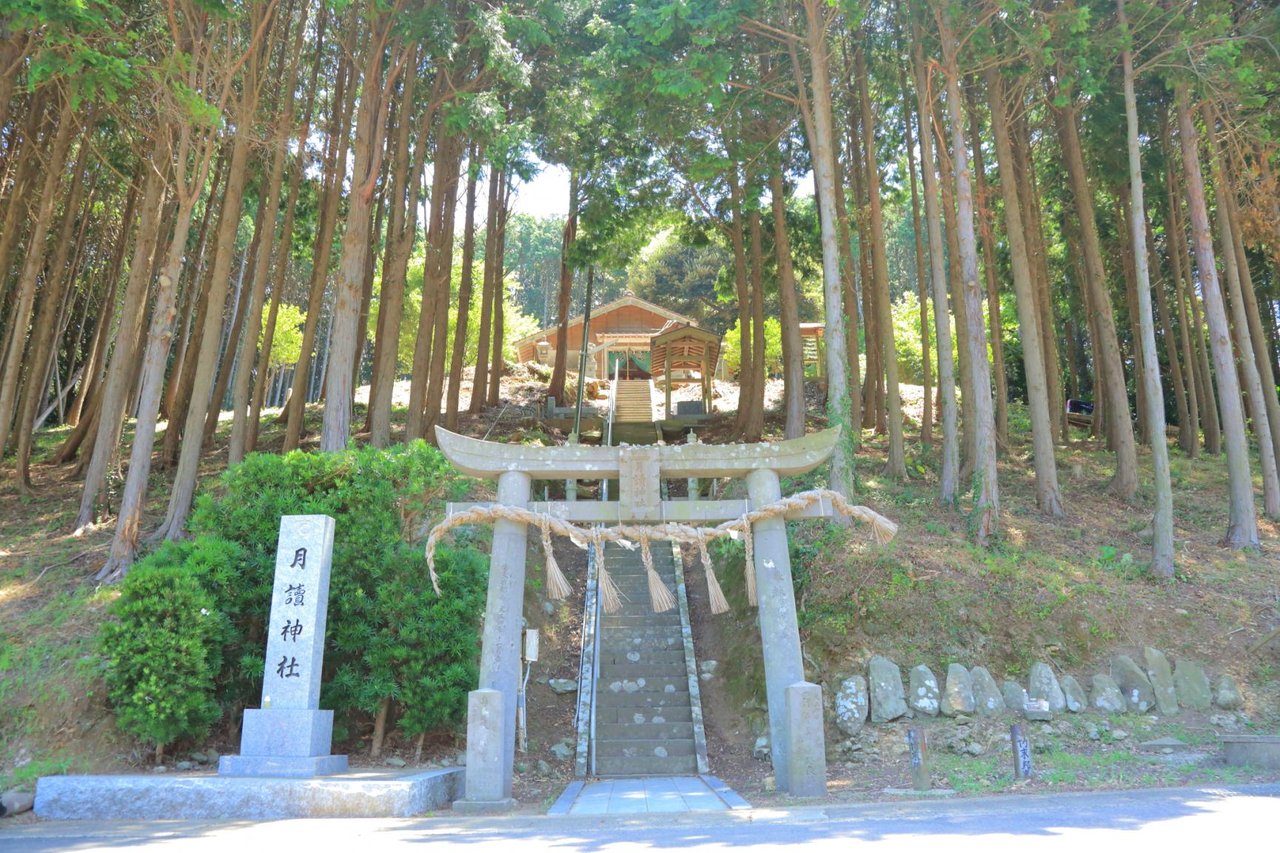
Quiet forest shrine to Tsukuyomi, said to hear wishes about the calendar, tides, safety, and safe navigation.
Demon's Footprint (Makizaki Park)
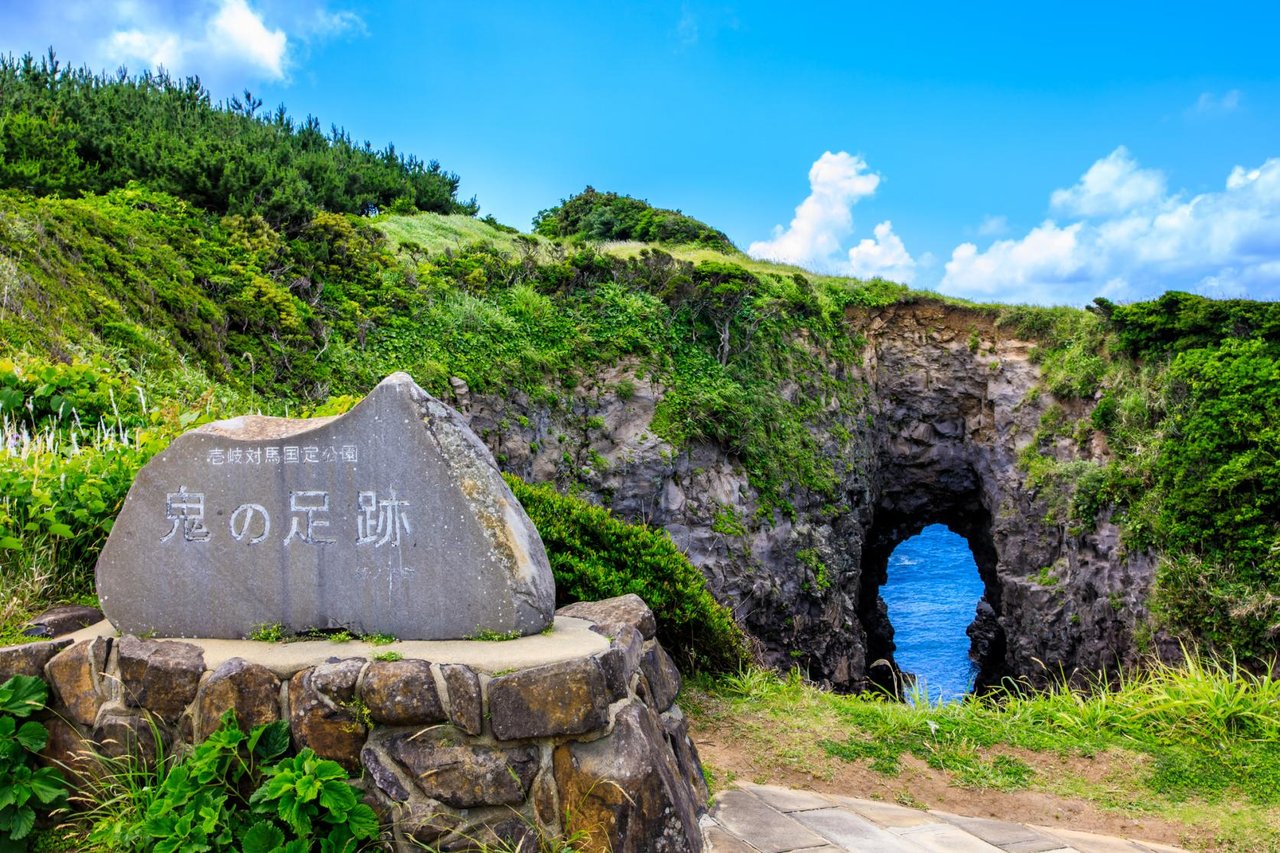
110m-around natural hole in Makizaki Park, legendarily an ogre's footprint, chosen among Japan's 100 famous caves in 2013.
Kumano Shrine
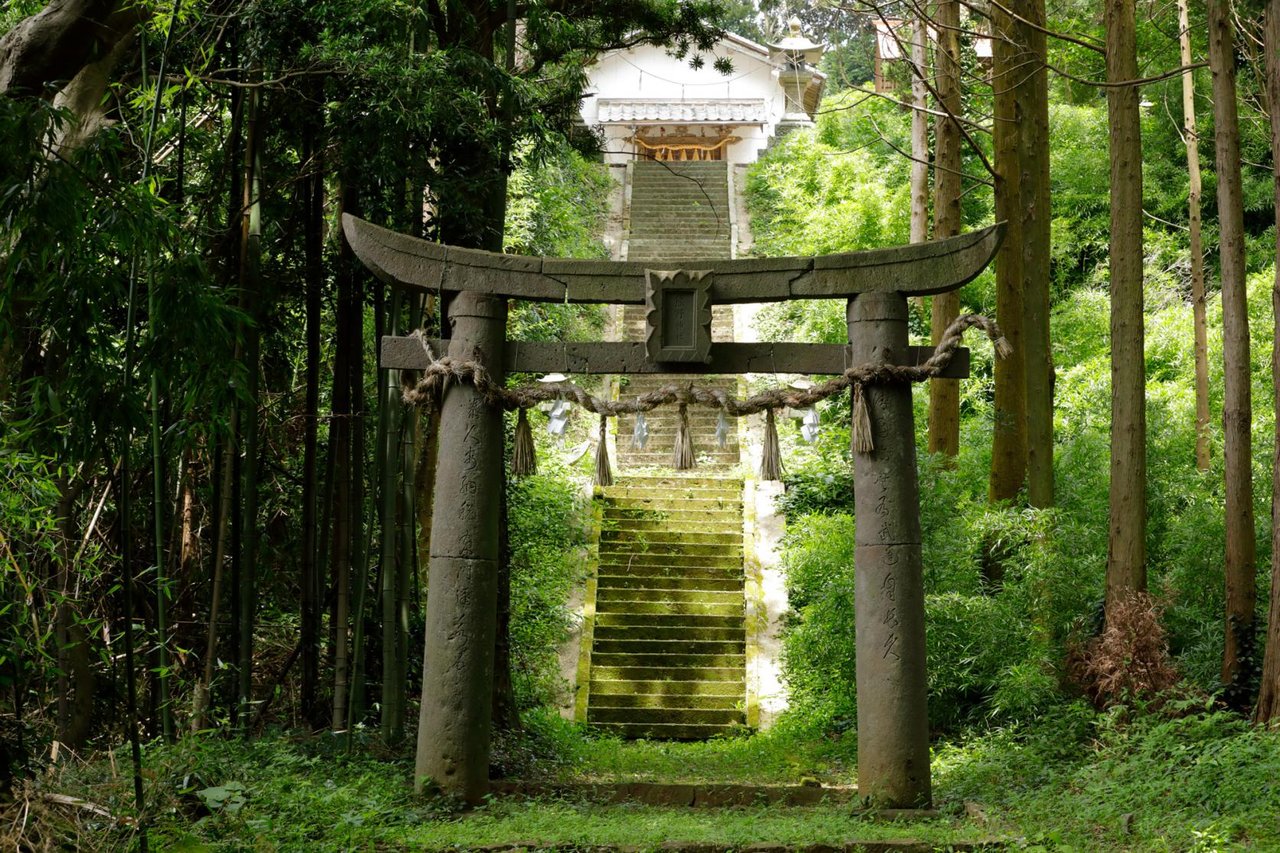
Identified with Kii's Kumano Shrine. Tachibana Sadakane is recorded as enshrining it after praying in Empress Jingu's Silla campaign.
Katsumoto Castle Ruins
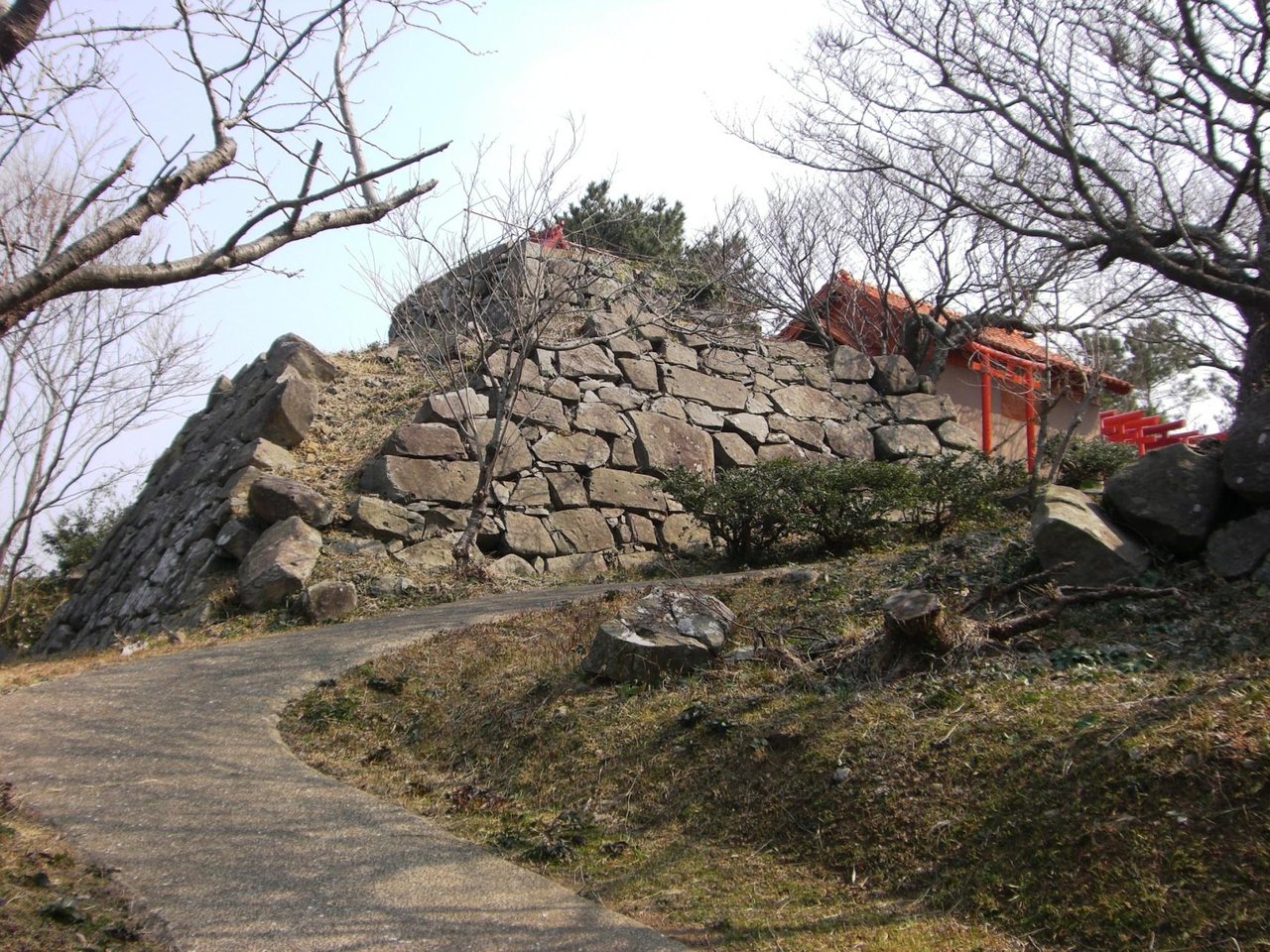
Castle ruins on a hill overlooking Katsumoto Port and Tsushima, said built in four months in 1591 for Hideyoshi.
Otake Shrine
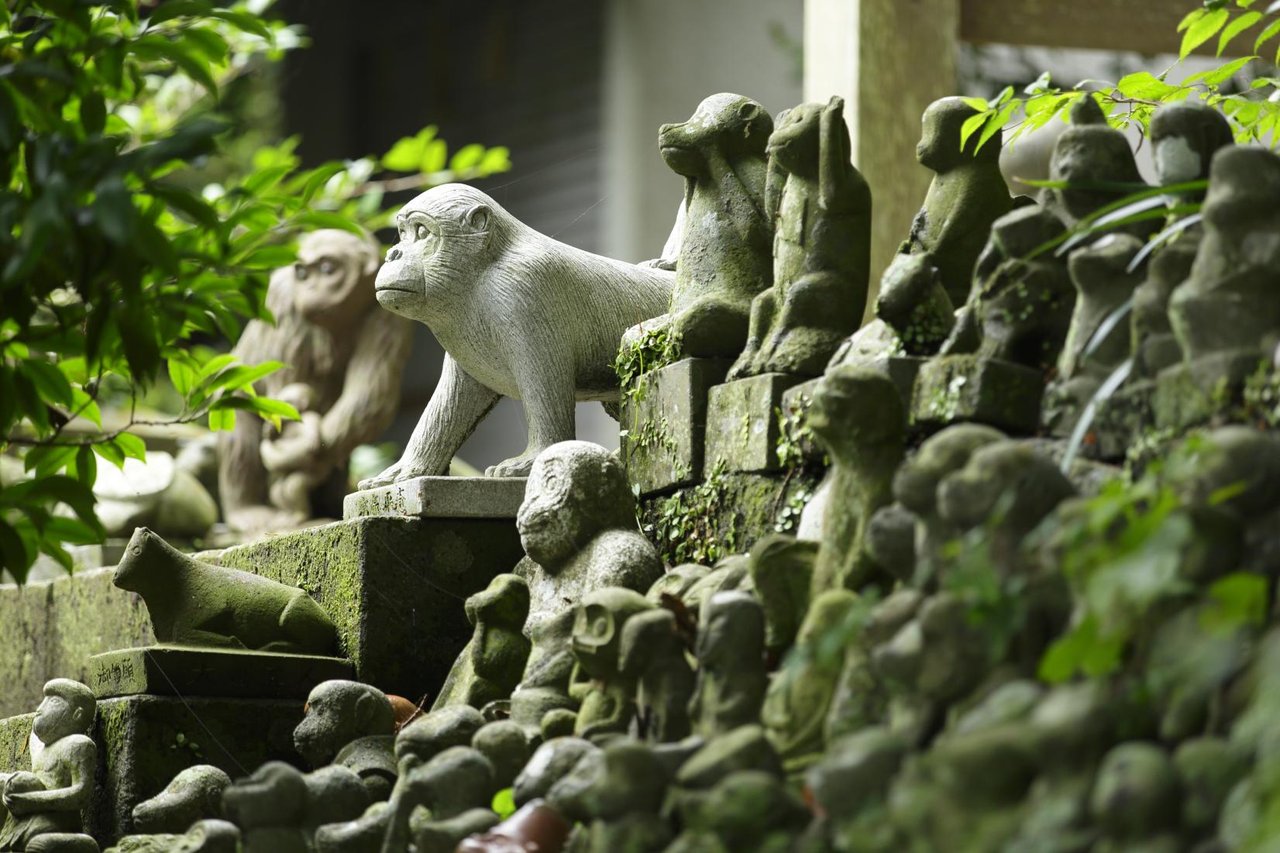
Shrine where the whole mountain was once off-limits, said to be where Iki's first gods descended, enshrining Sarutahiko.
Kakegi Kofun
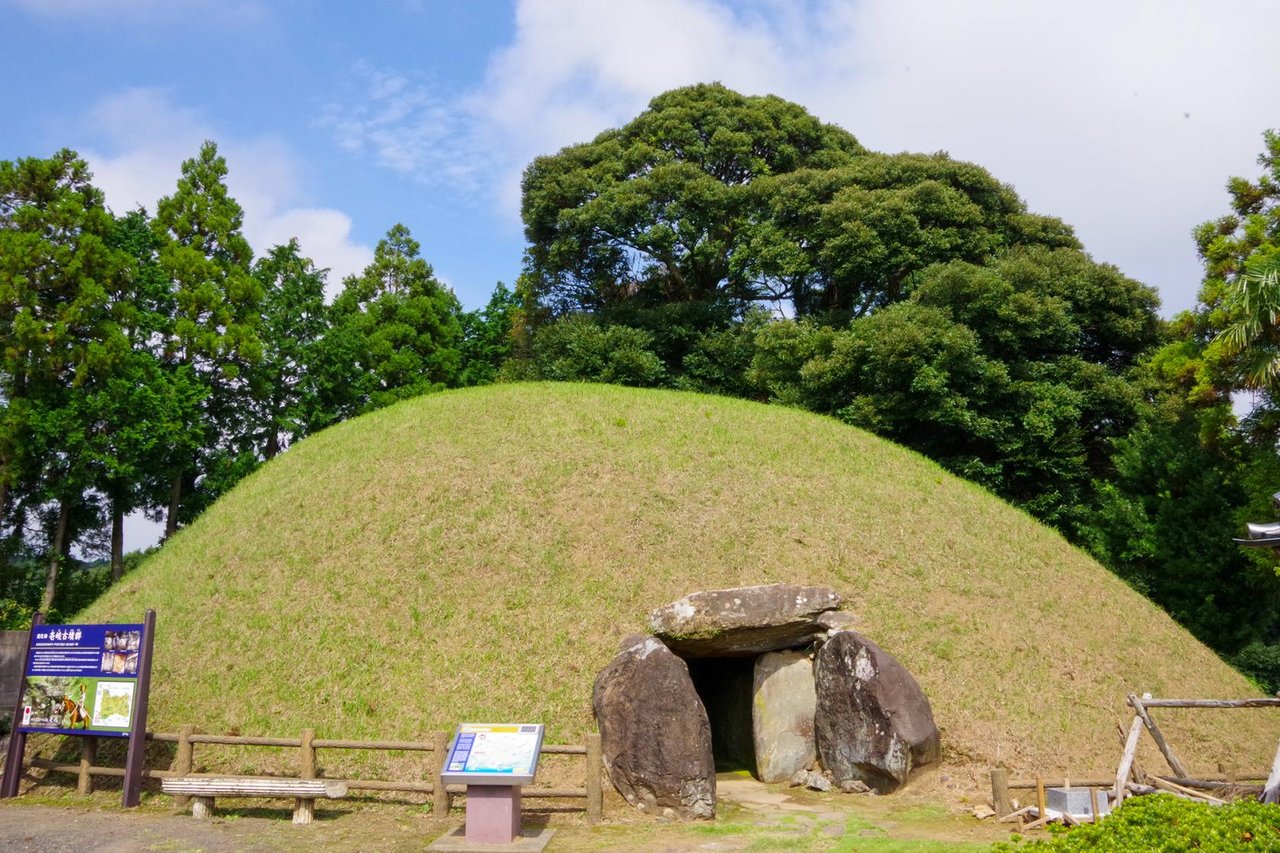
Round tumulus from the late 6th to early 7th century, retaining Iki's only hollowed house-shaped stone coffin.
Amatenagao Shrine
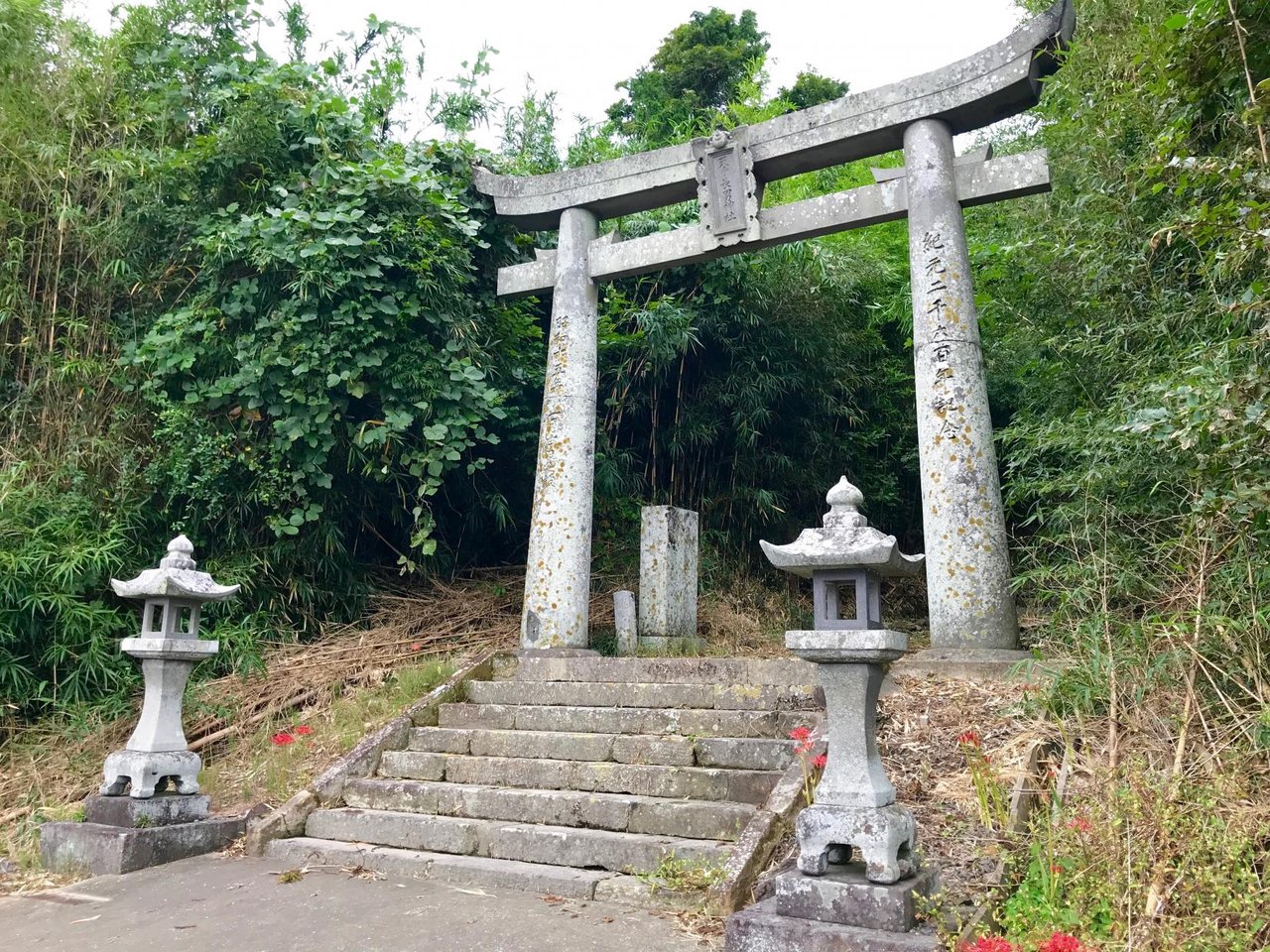
Iki's first shrine atop 137 mossy steps. Its 1070 Maitreya is Japan's third-oldest stone statue, an Important Cultural Property.
Iki Foundation Stone
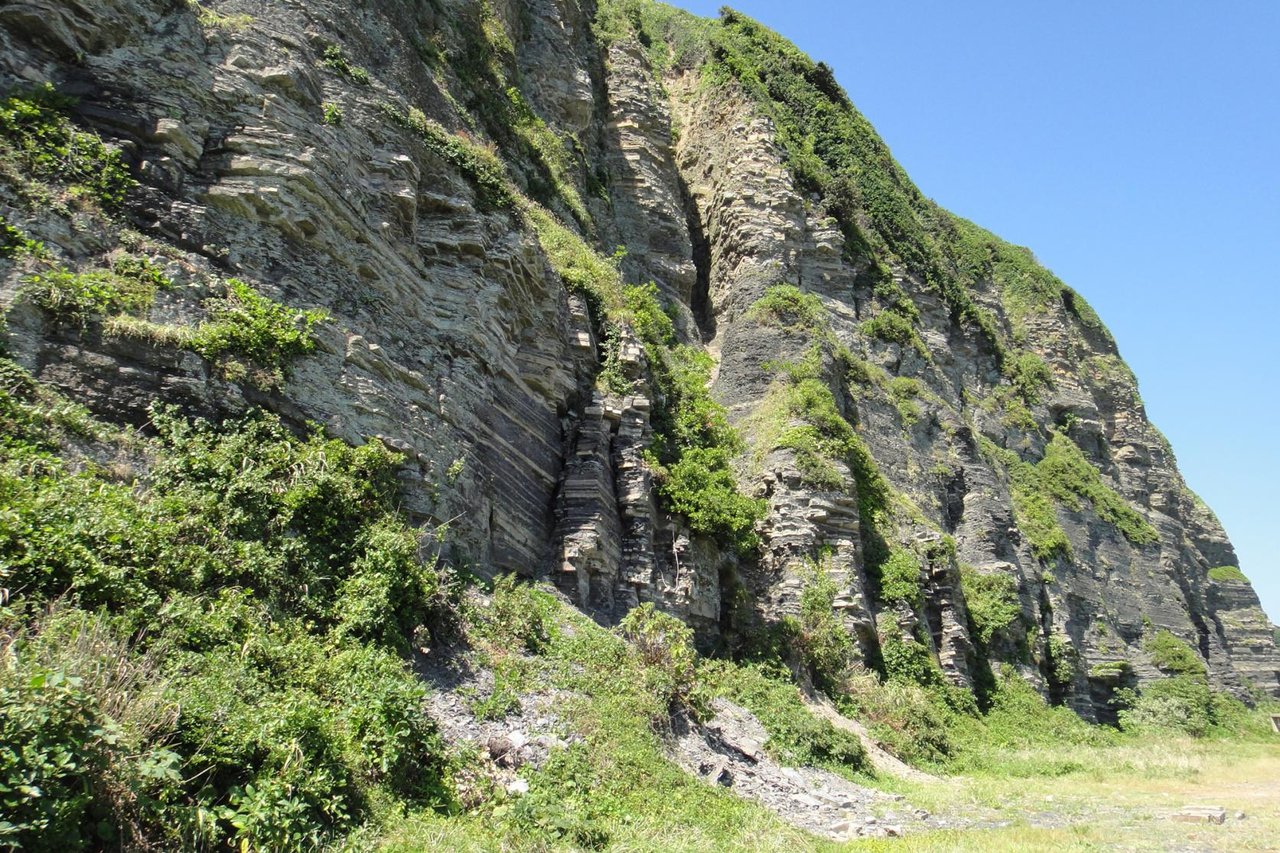
Cliffs of Katsumoto Formation at Amagahara Coast: sandstone and mudstone laid down about 25 million years ago, Iki's oldest strata.
Matsunaga Memorial Museum
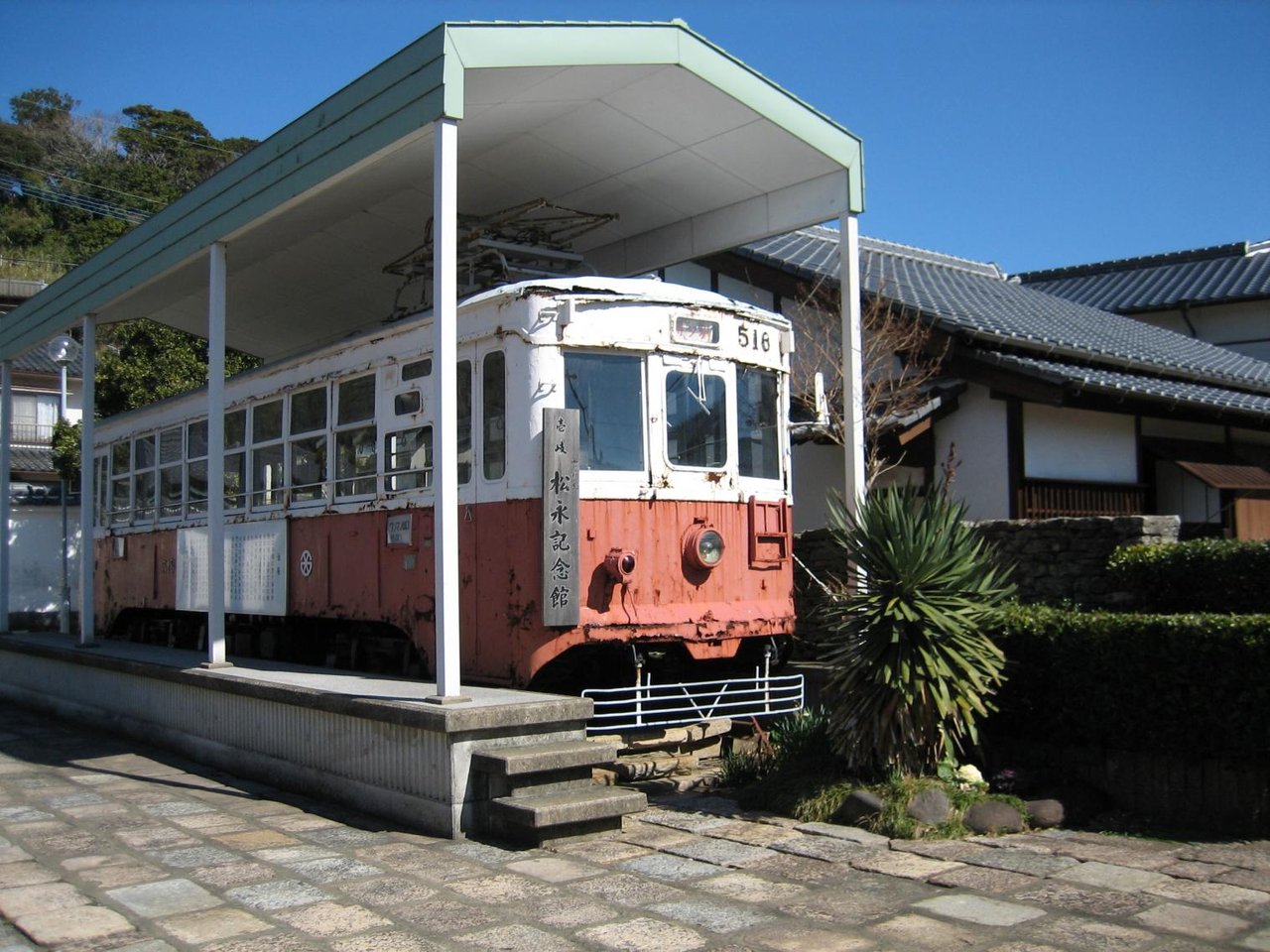
Memorial museum for Iki-born Yasuzaemon Matsunaga, showing his belongings, letters, and a 1909 Fukuoka streetcar at the entrance.
Haruichiban Tower
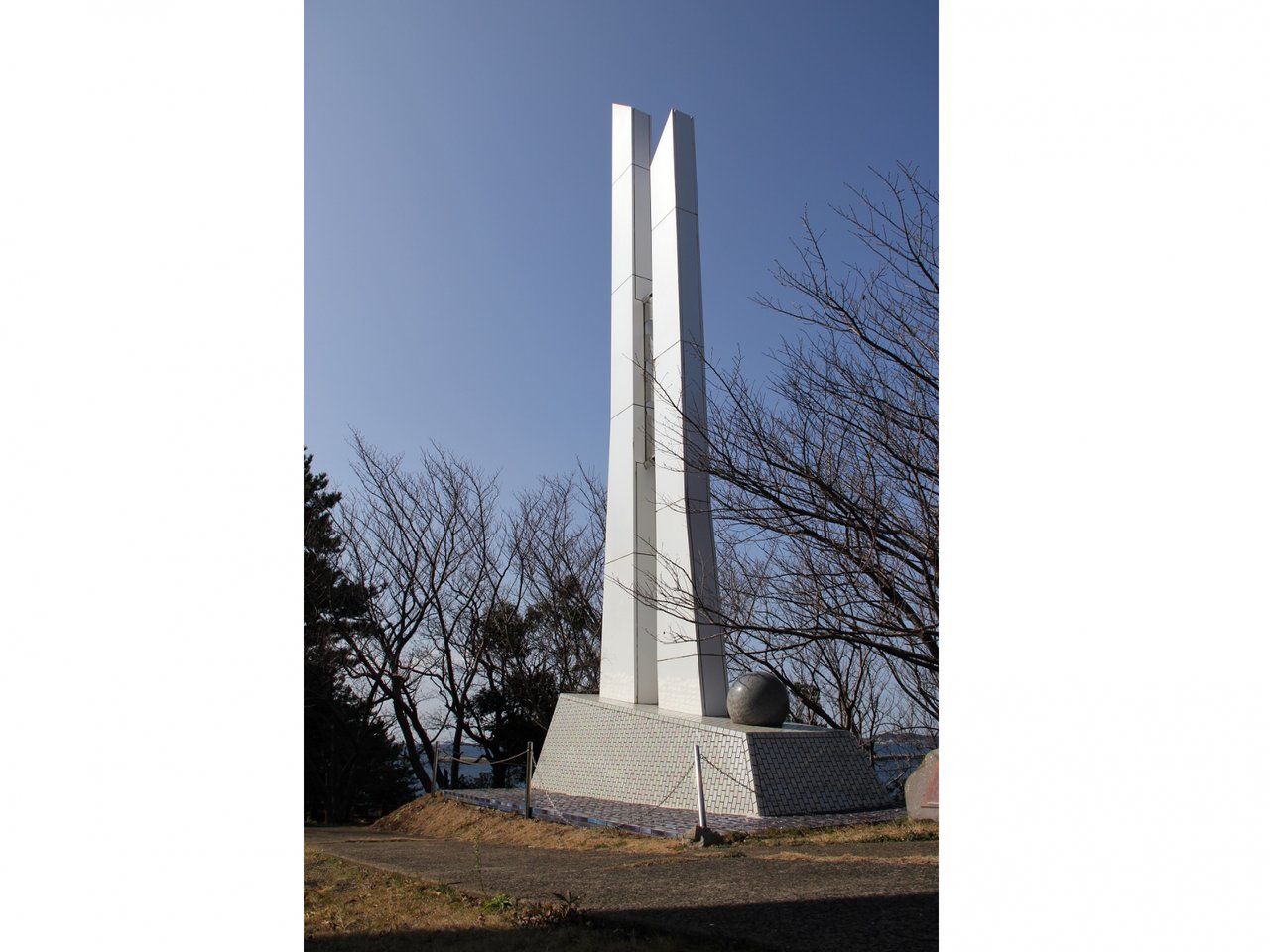
Ship-shaped tower erected in 1987 at Motoi Park to remember fishermen lost in the strong 1859 south wind.
Haze Rock Dike
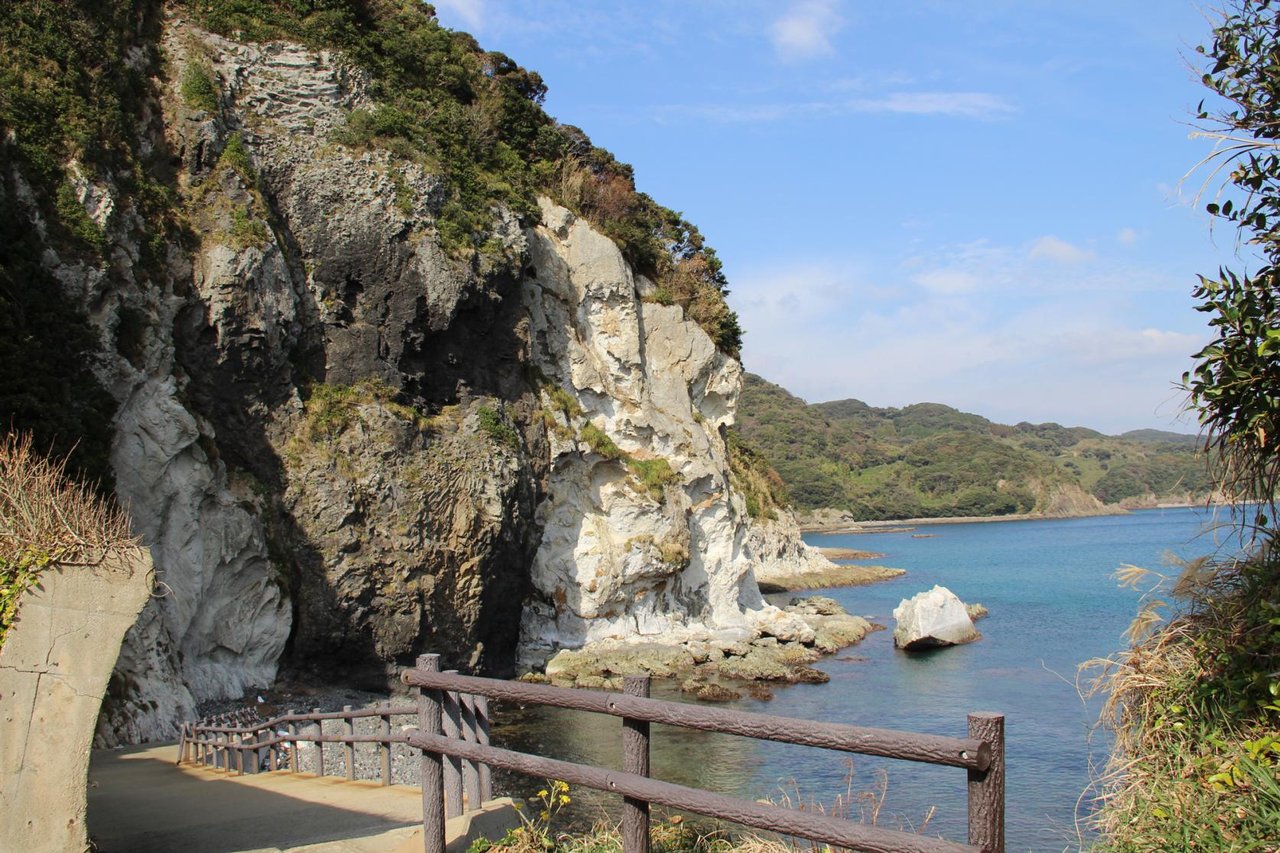
About 40 m dike on southern Iki, locally called Shirataki, where black basalt rises through white rhyolite. Prefectural natural monument.
Sugoroku Kofun
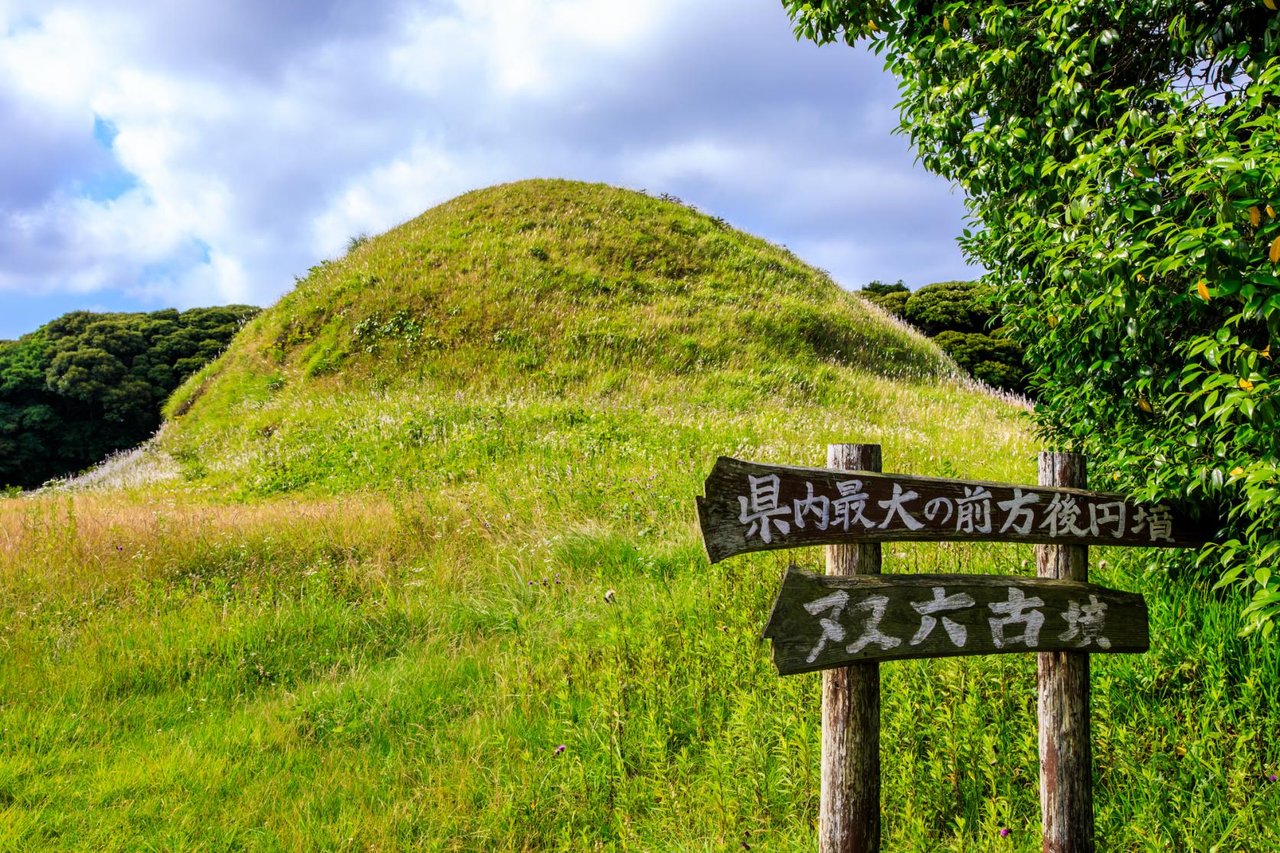
Nagasaki's largest keyhole tumulus, 91m long on a 100m hill, with a gondola-shaped boat carving in the stone chamber.
Hakozaki Hachiman Shrine
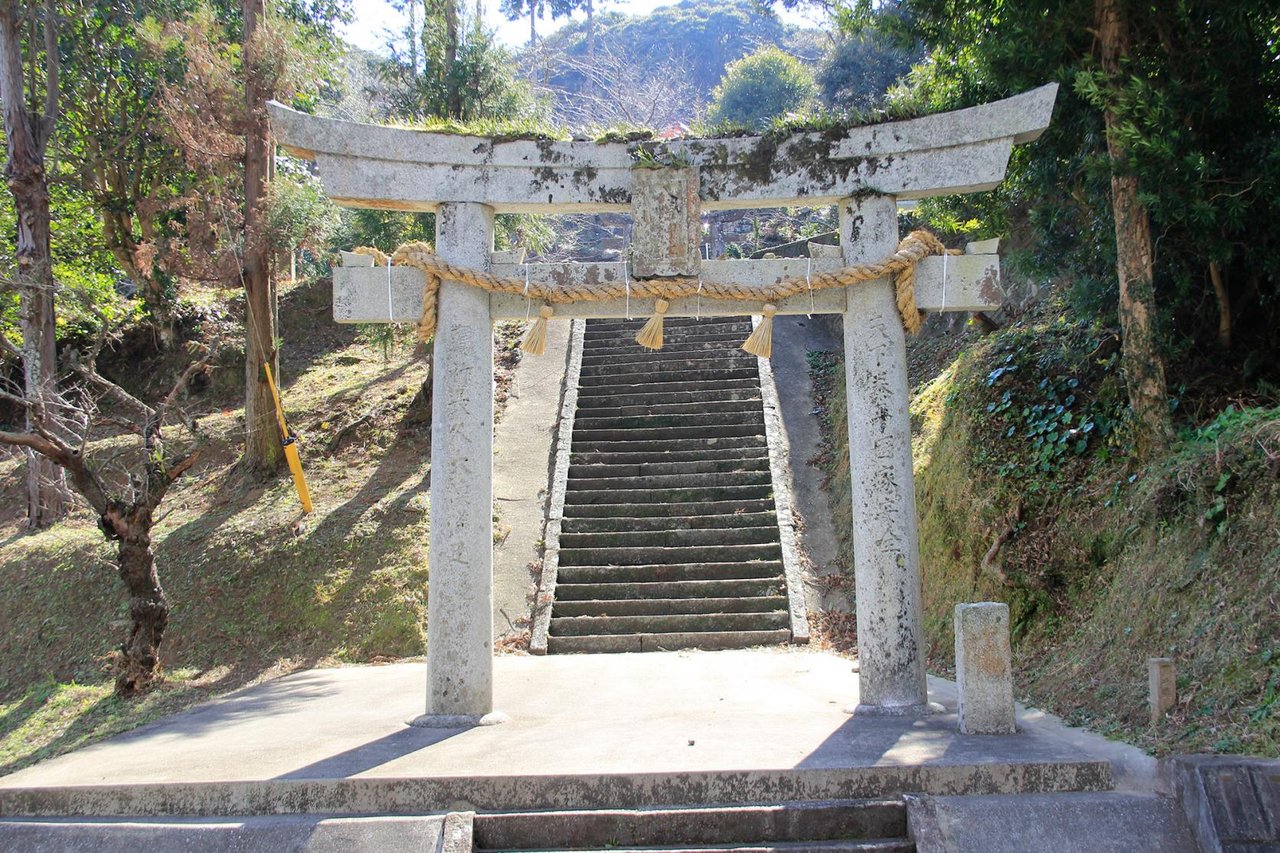
Formerly Kairi Hachiman Shrine; records Iki whaling's start. Peach-shaped basin; elephants and pigeons carved on vermilion hall.
Tsushimazuka Kofun
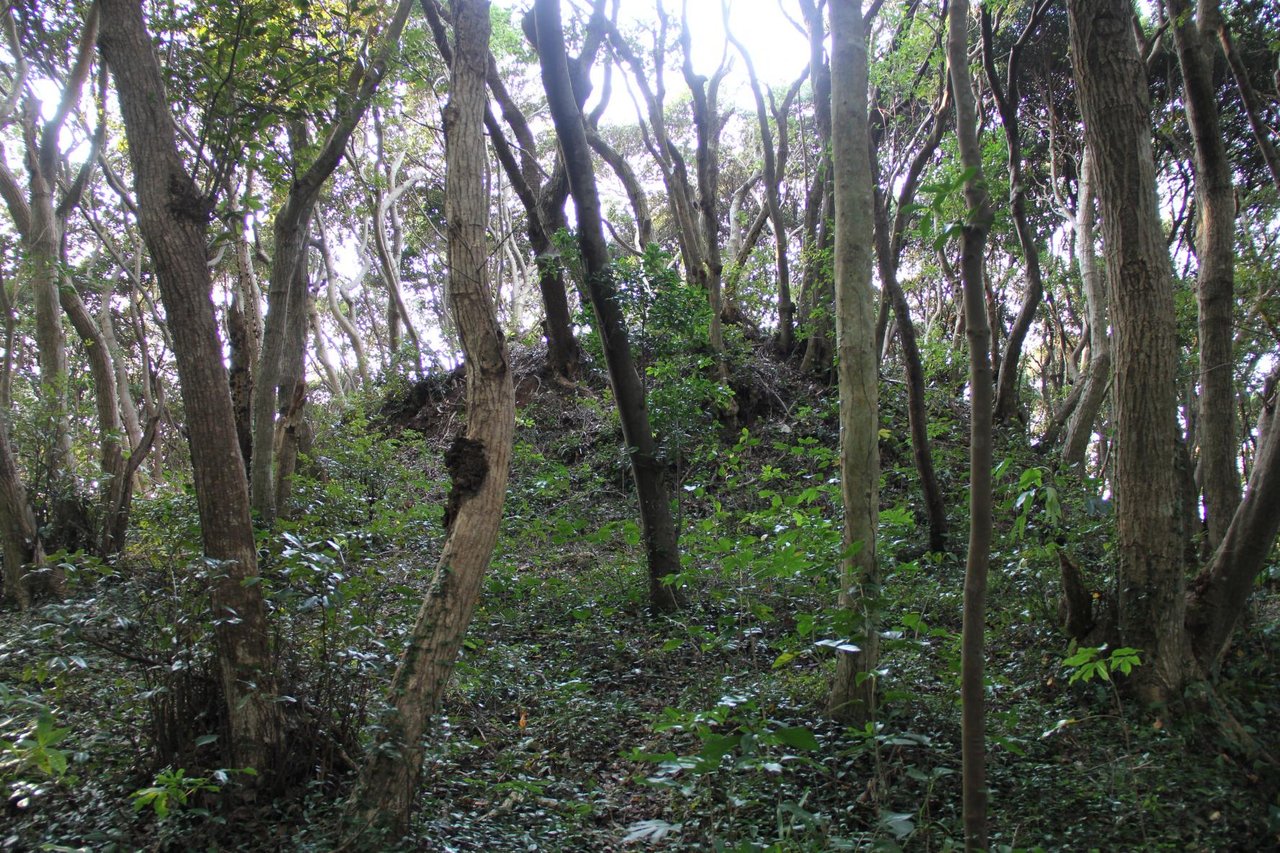
National historic site, Iki's second-largest keyhole tumulus at 63m, with geometric and triangular carvings in the stone chamber.
Mitarashimizu Falls
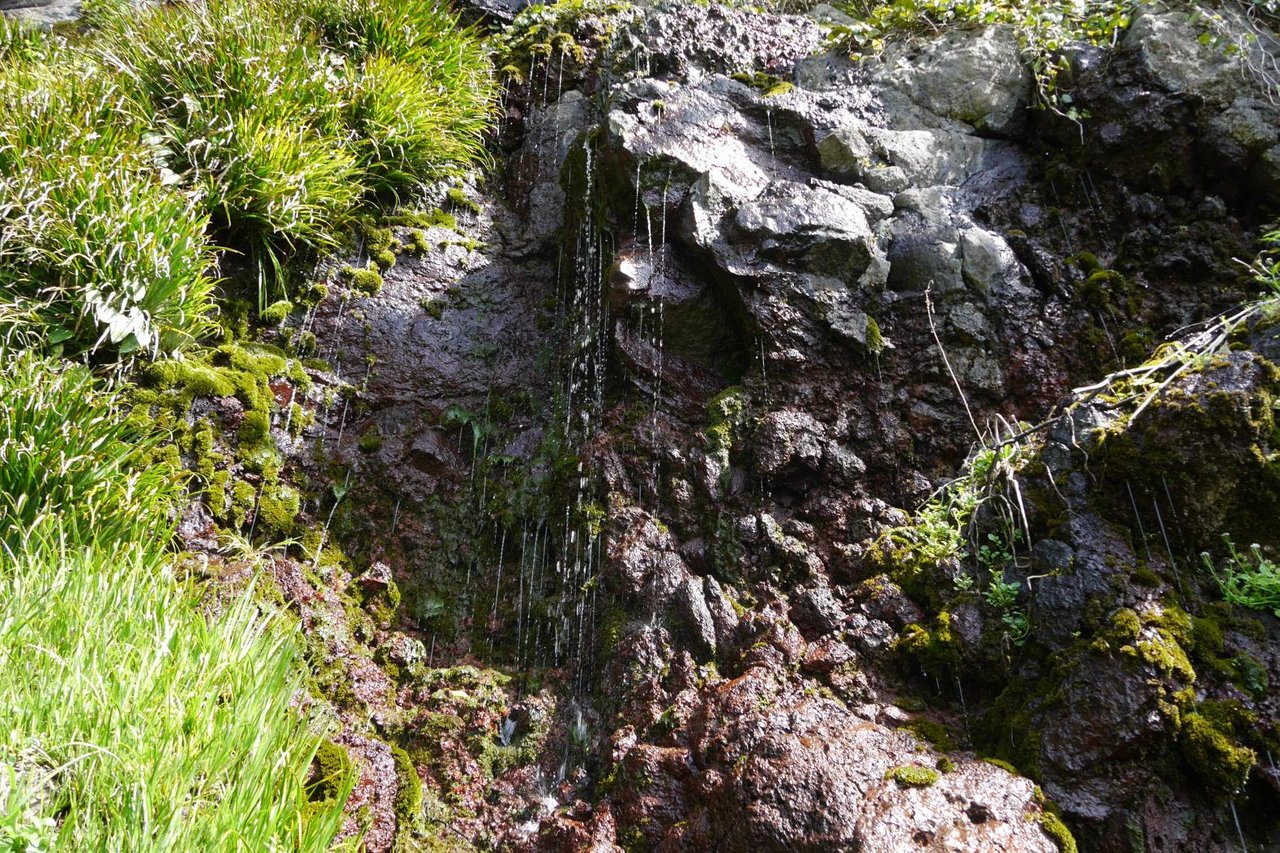
Falls said to have formed when Kobo Daishi struck a rock with his staff.
Hime Shrine / Tobikawa Shrine
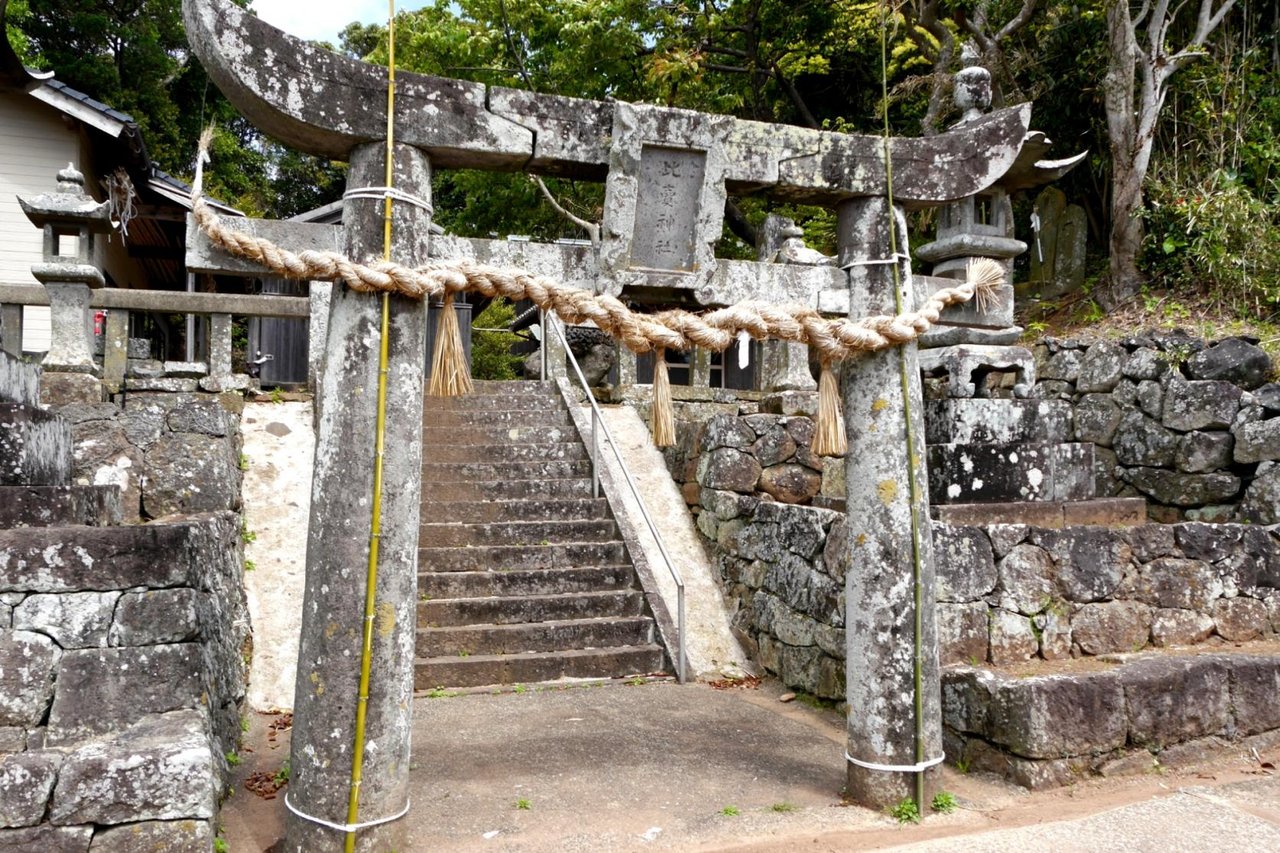
Enshrines Emperor Jimmu and three other deities. Annual festival is April 3 with a procession and ritual dance.
Hyozu Shrine
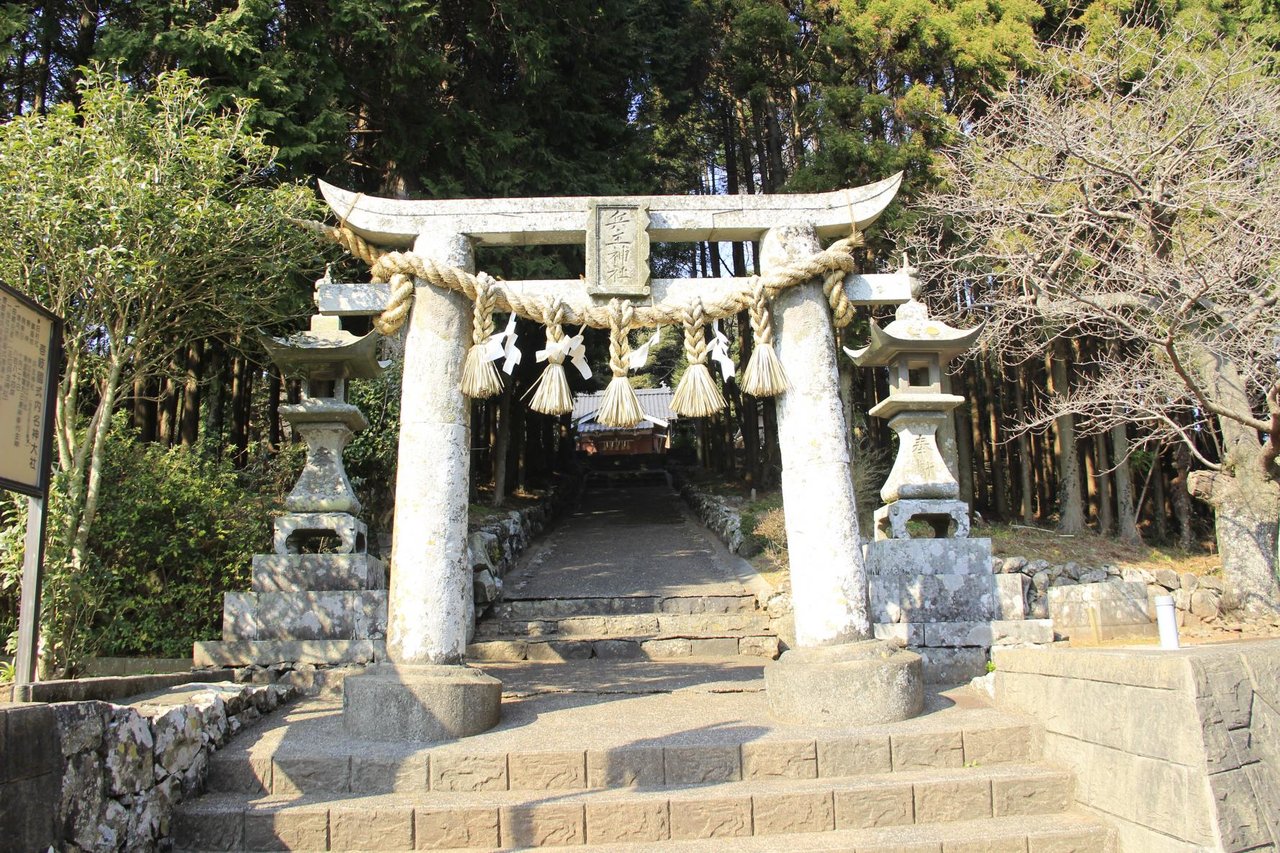
Priest is not resident; reserve a shrine stamp by phone. Enshrines Susanoo, Onamuchi, and Kotoshironushi.
Kokubunji Temple Ruins
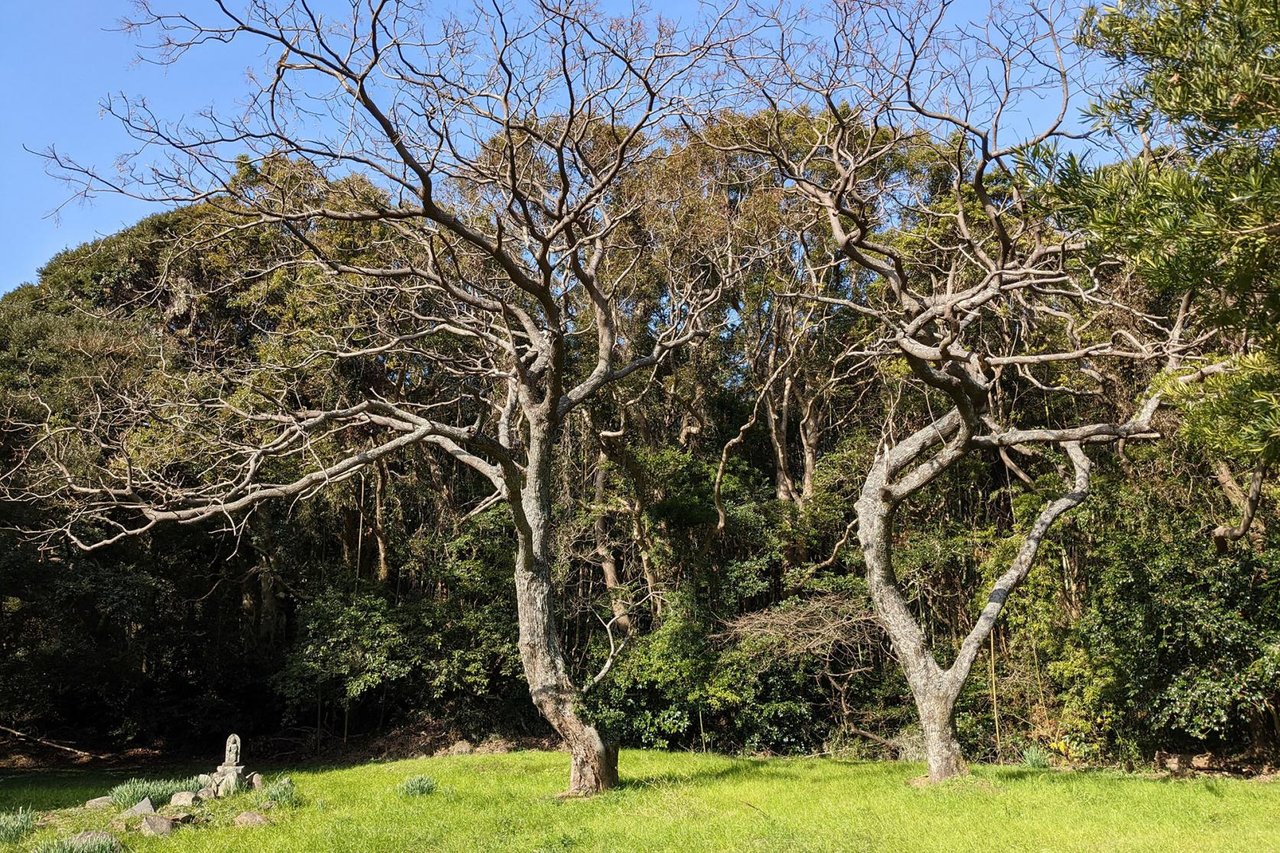
Iki Kokubunji ruins west of Kunikatanushi Shrine, with foundation stones and Heijo-style tiles.
Misakito Shrine
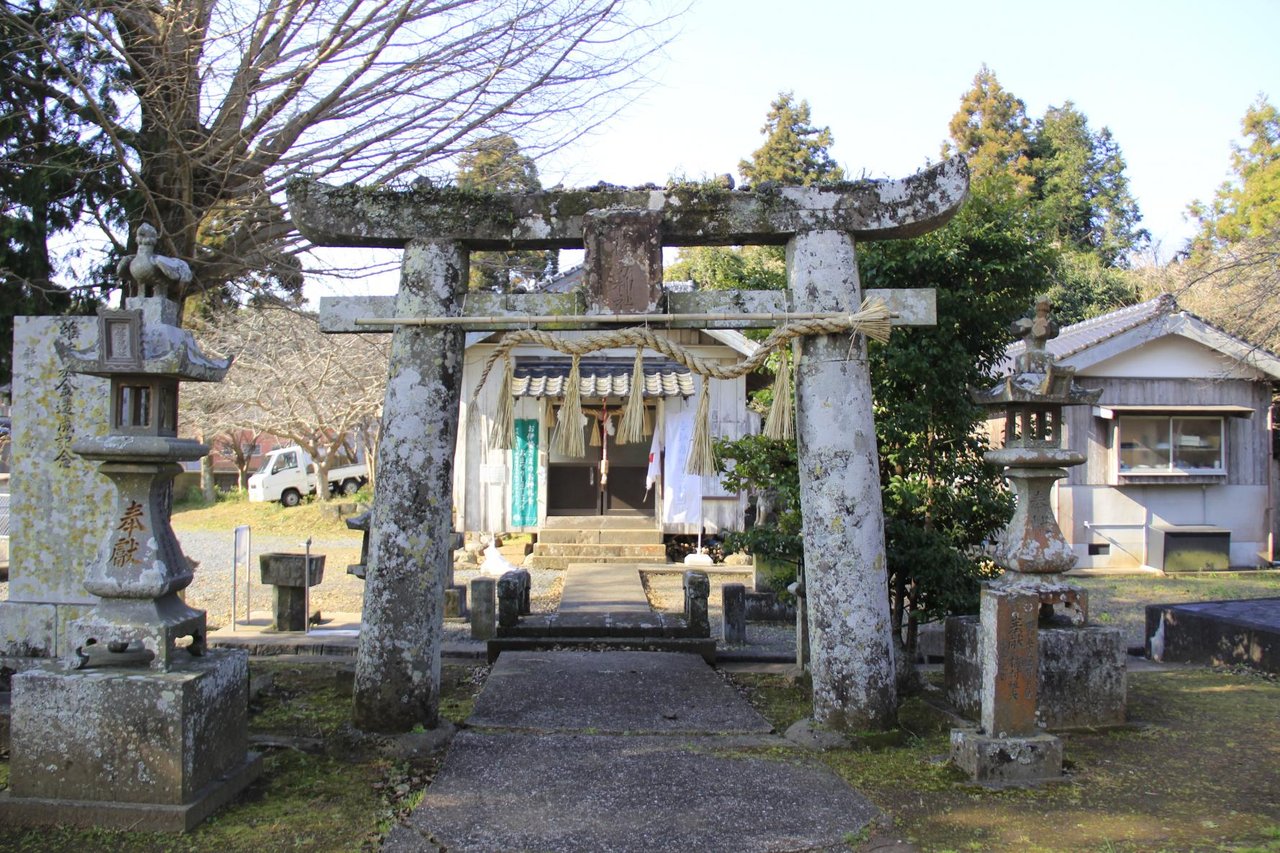
Founded in 811; enshrines Yamato Takeru. One of 24 Engishiki shrines. Guardian lions said to be by Yamauchi Rihei.
Shichiro Shrine
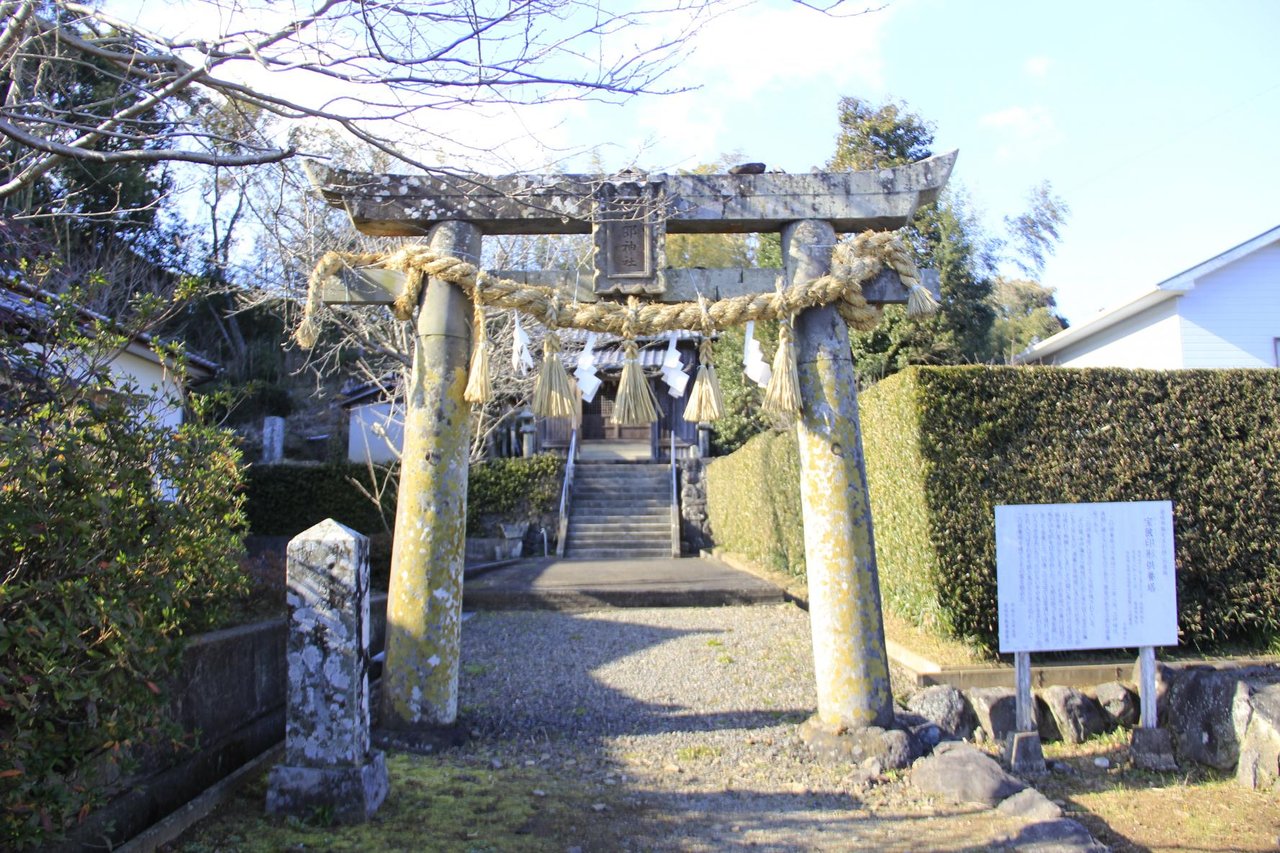
Enshrines Susanoo and four other deities. The annual festival is November 28, with a ritual dance.
Ashibe Sumiyoshi Shrine
Enshrines Amaterasu and five other deities. The annual festival falls on the 9th day of the 9th lunar month.
Kuraokami Shrine
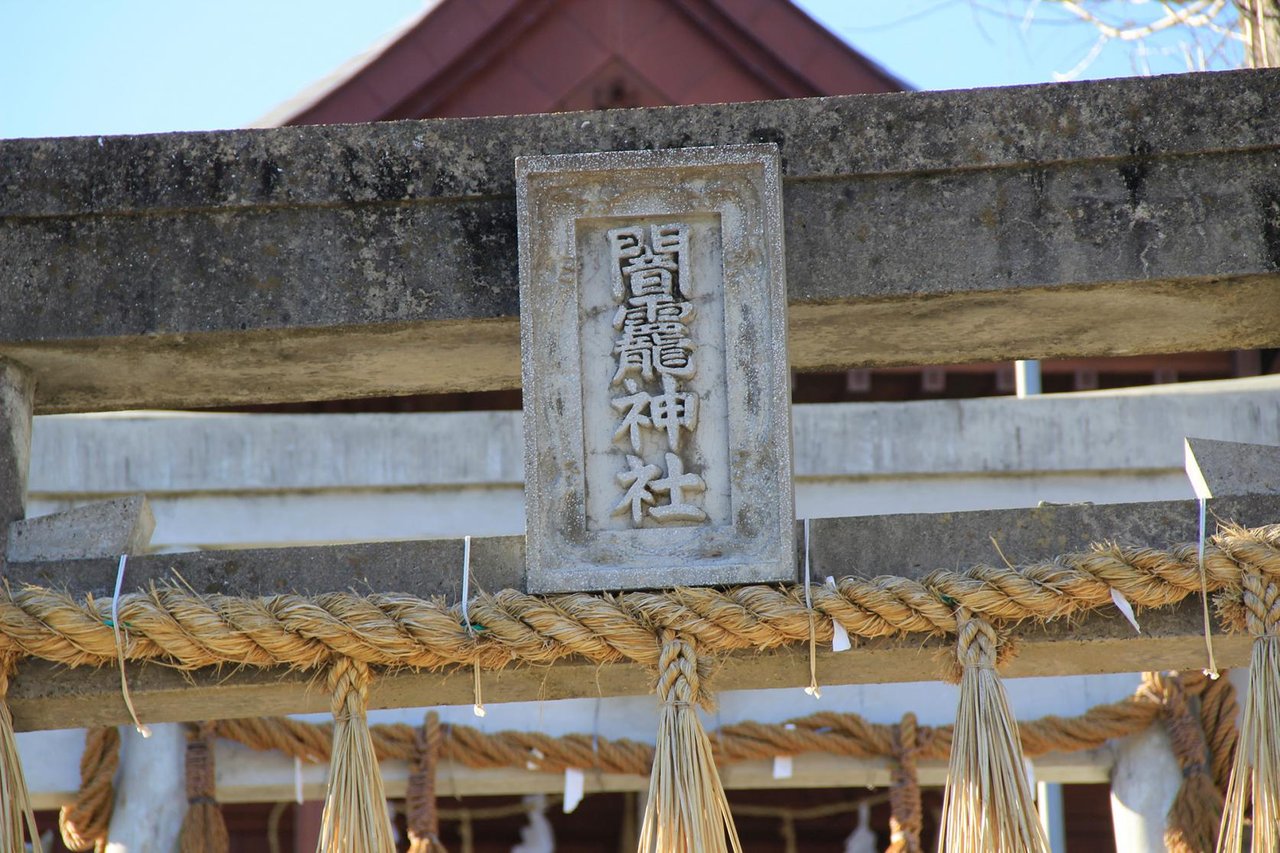
Annual festival on the 20th of the 9th lunar month includes a procession and ritual dance.
Seibo Shrine
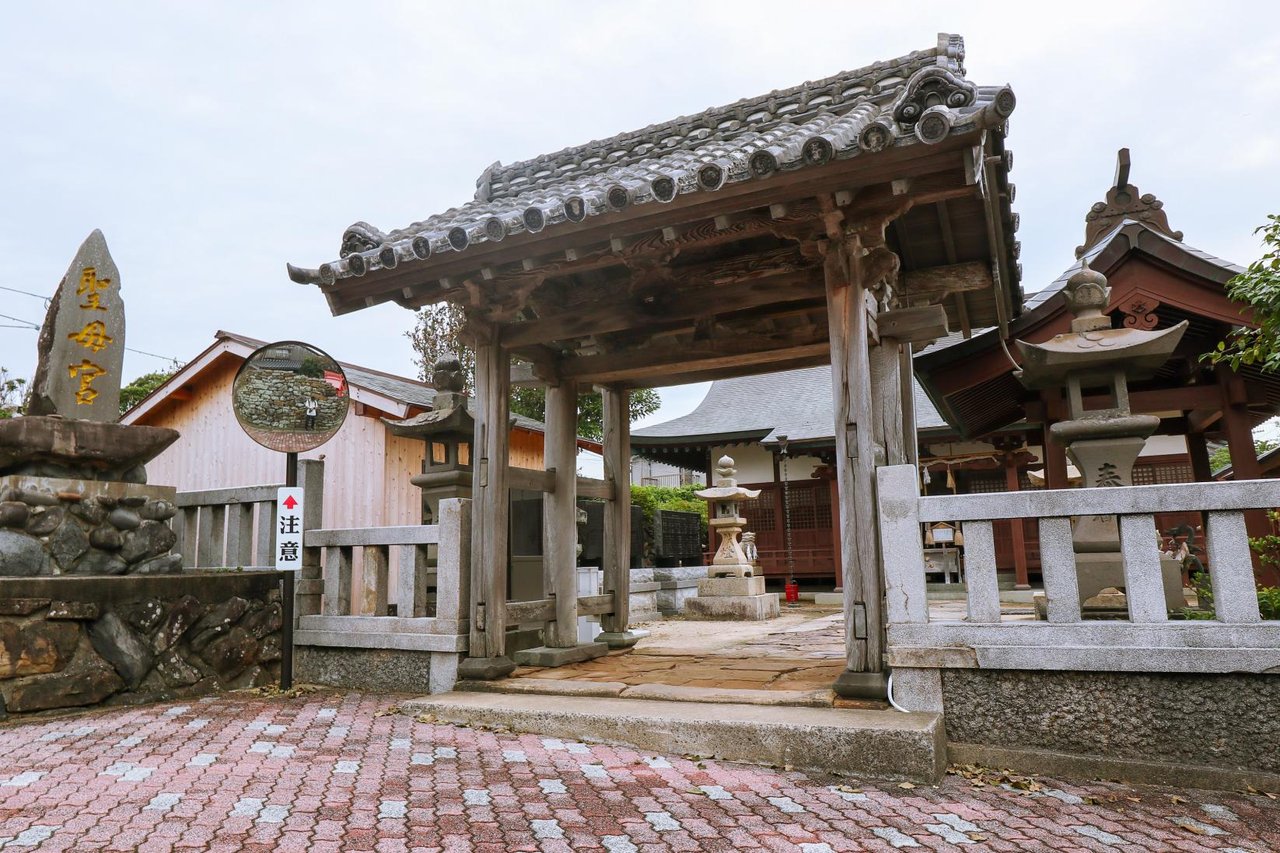
Protects Katsumoto and enshrines Empress Jingu, with over 1,300 years of history.
Grave of Shoni Suketoki
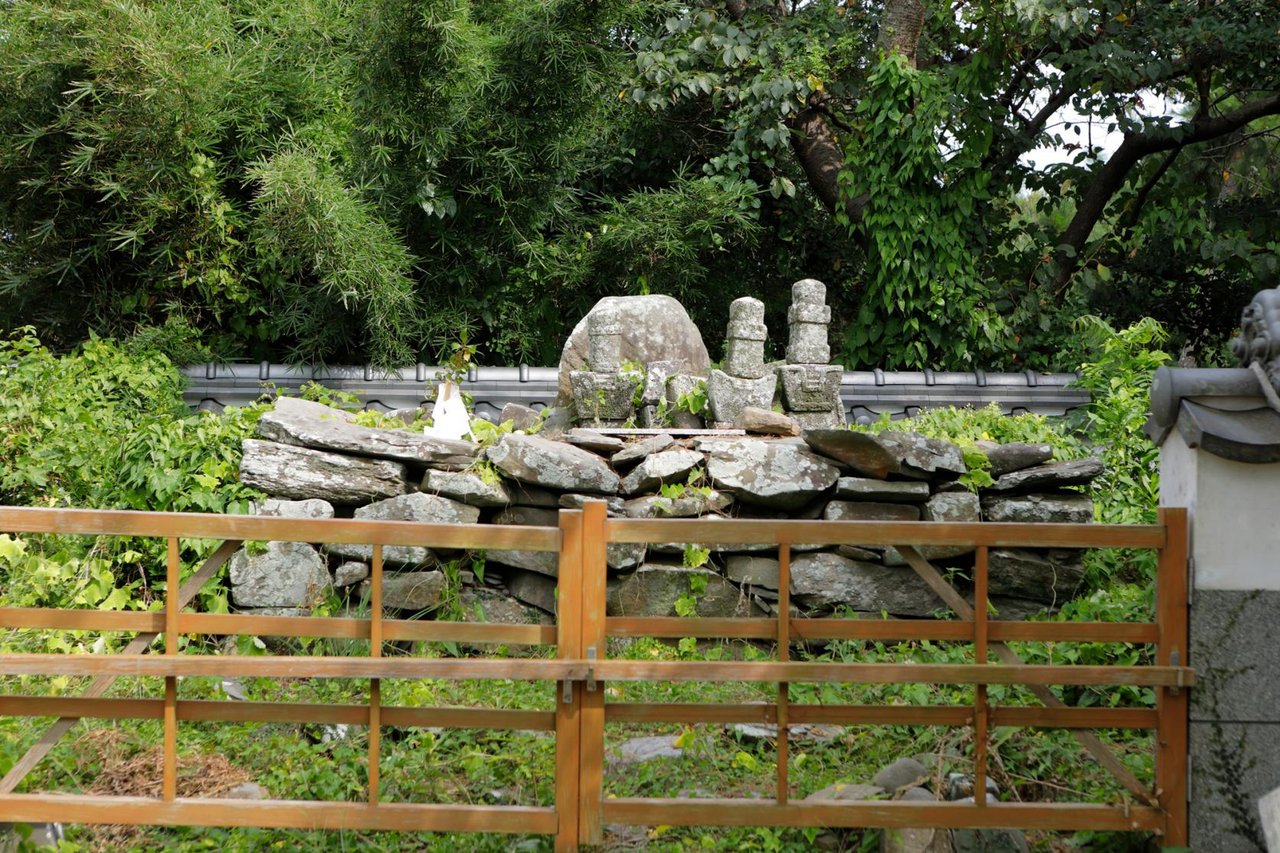
Grave in Shoni Park of 19-year-old Iki deputy Shoni Suketoki, who fought the 1281 Mongol landing.
Ikeda Hachiman Shrine
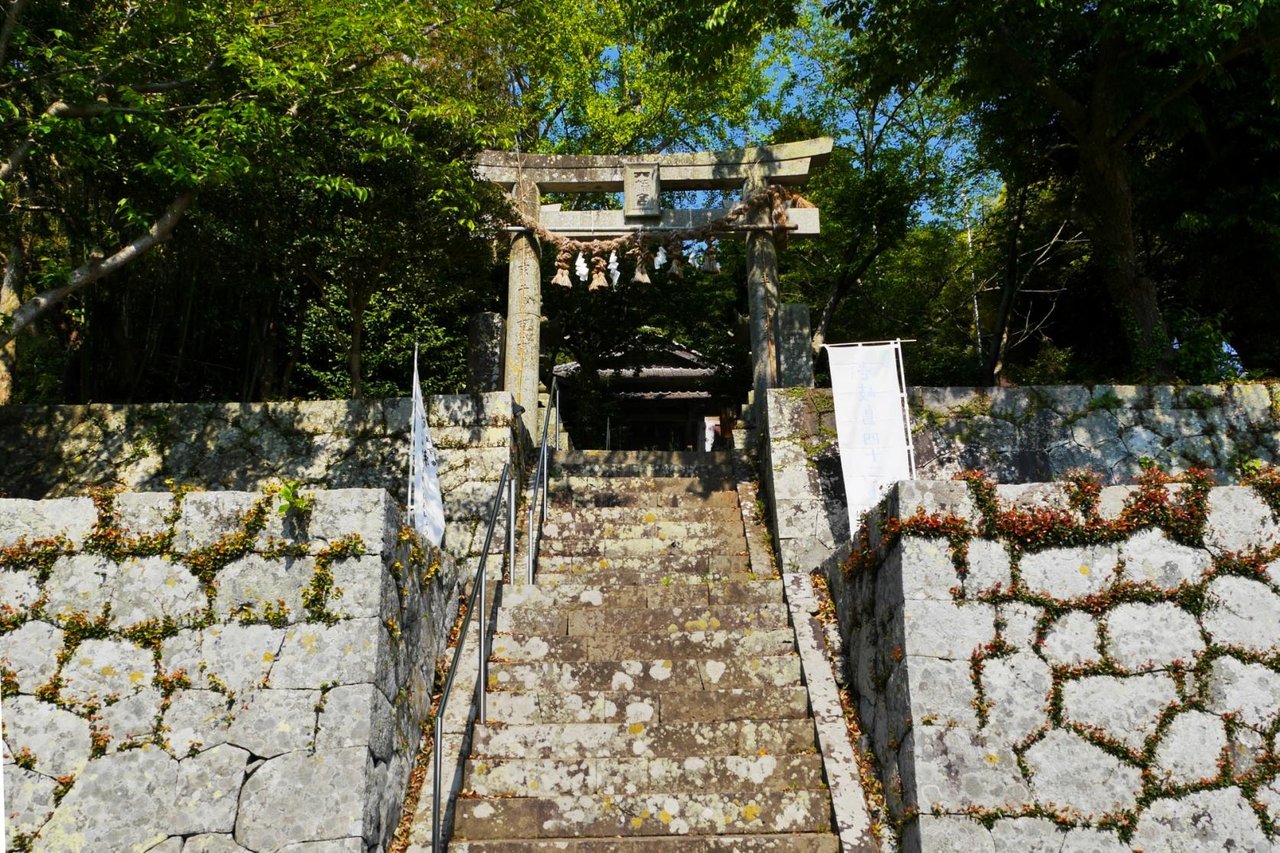
Enshrines Emperor Ojin. Annual festival is November 21 with ritual dance; deity-welcoming rite is November 29.
Kagamitake Shrine
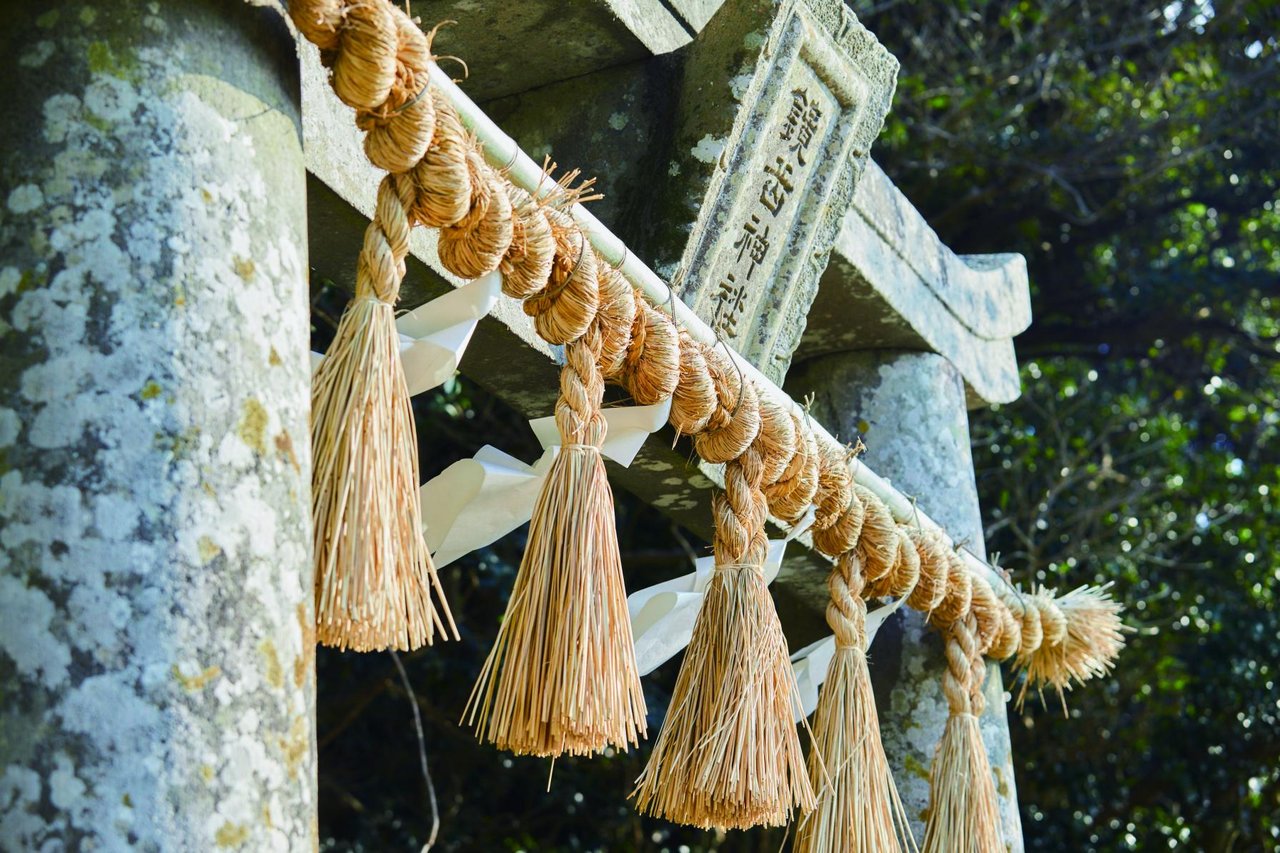
The hall is on the summit, reached by over 300 stone steps with large rises; climb slowly and carefully.
Ankoku-ji
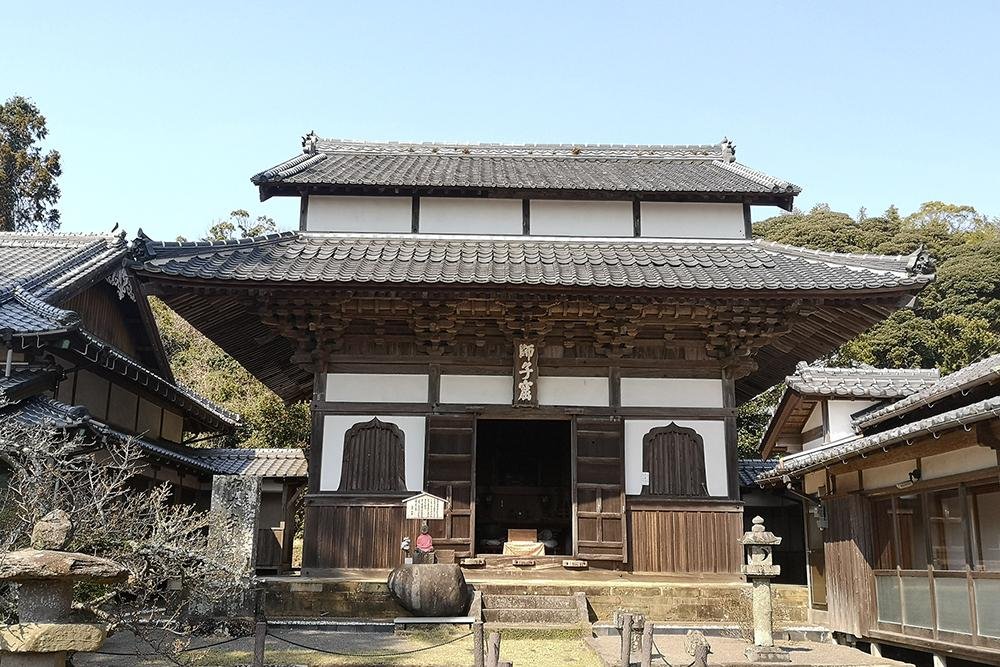
Rinzai temple renamed from Kaiin-ji in 1338. Holds an Important Cultural Property sutra and a cedar over 600 years.
Kunitsuokami Shrine
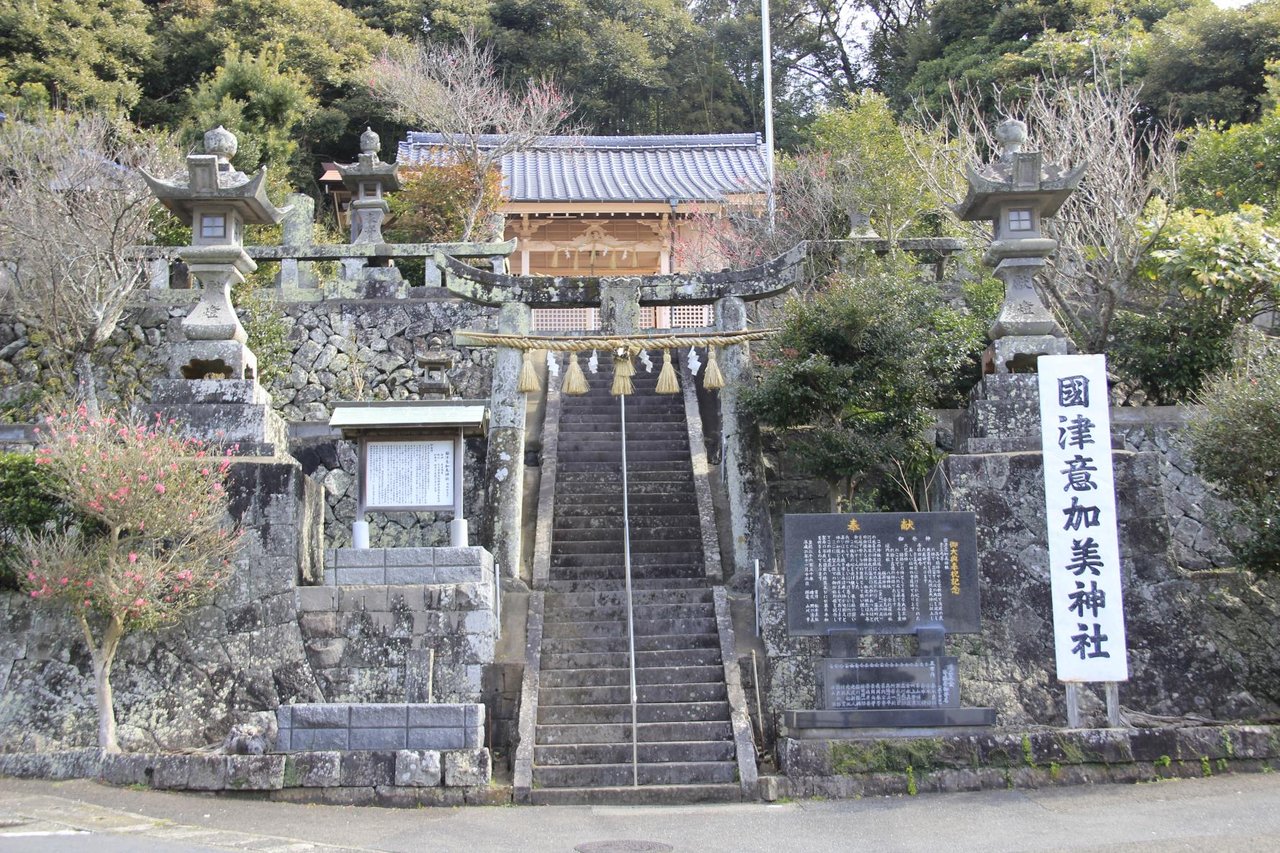
Enshrines Susanoo. Guardian lions by Iki master Yamauchi Rihei, made in 1862 at 63, have small heads and gentle form.
Takamioya Shrine
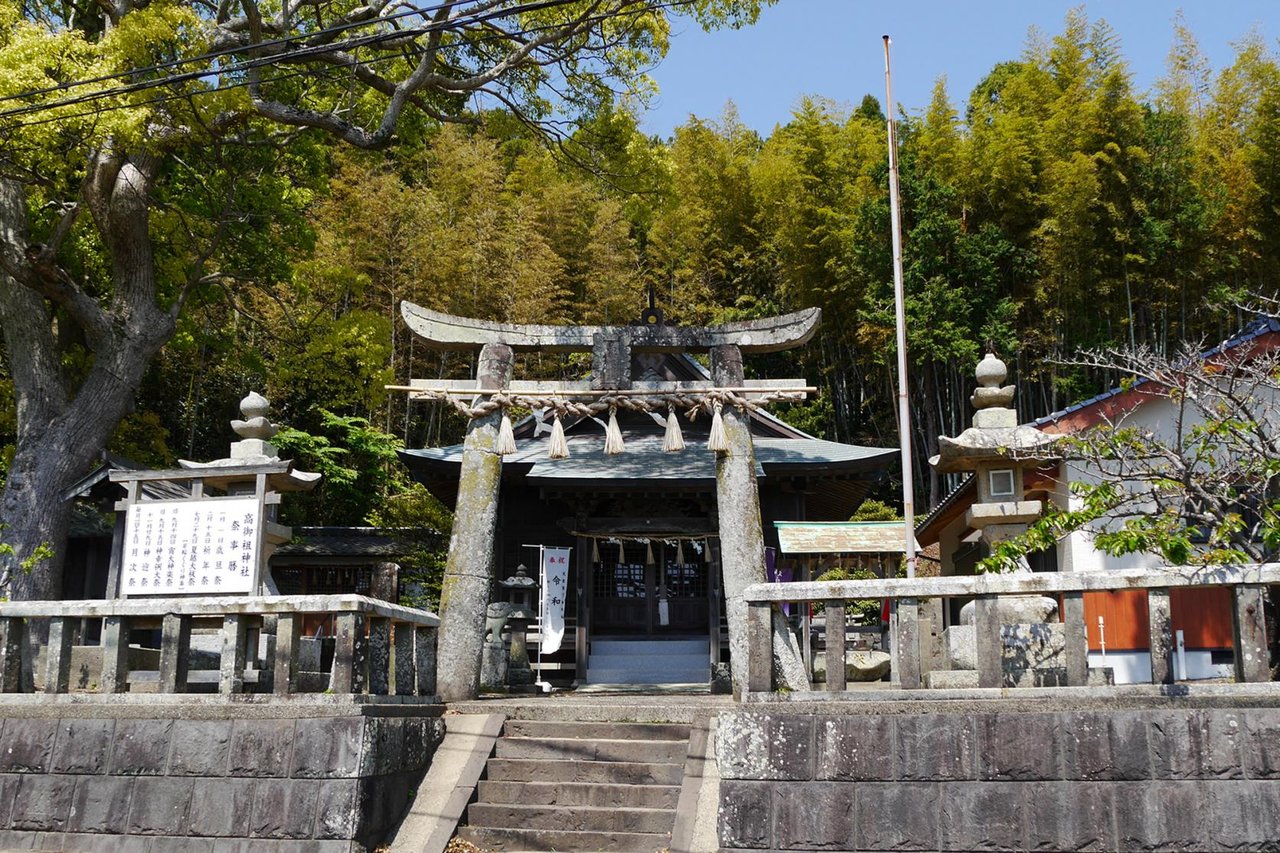
Said to date from 811. Enshrines Takamimusubi, Izanagi, and Izanami, with two rare pairs of guardian lions in the grounds.
Fukae Shrine
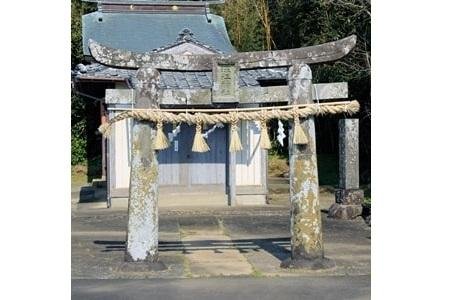
Enshrines Izanami and Okunitama. Annual festival is November 11 with a procession and ritual dance.
Kifune Shrine
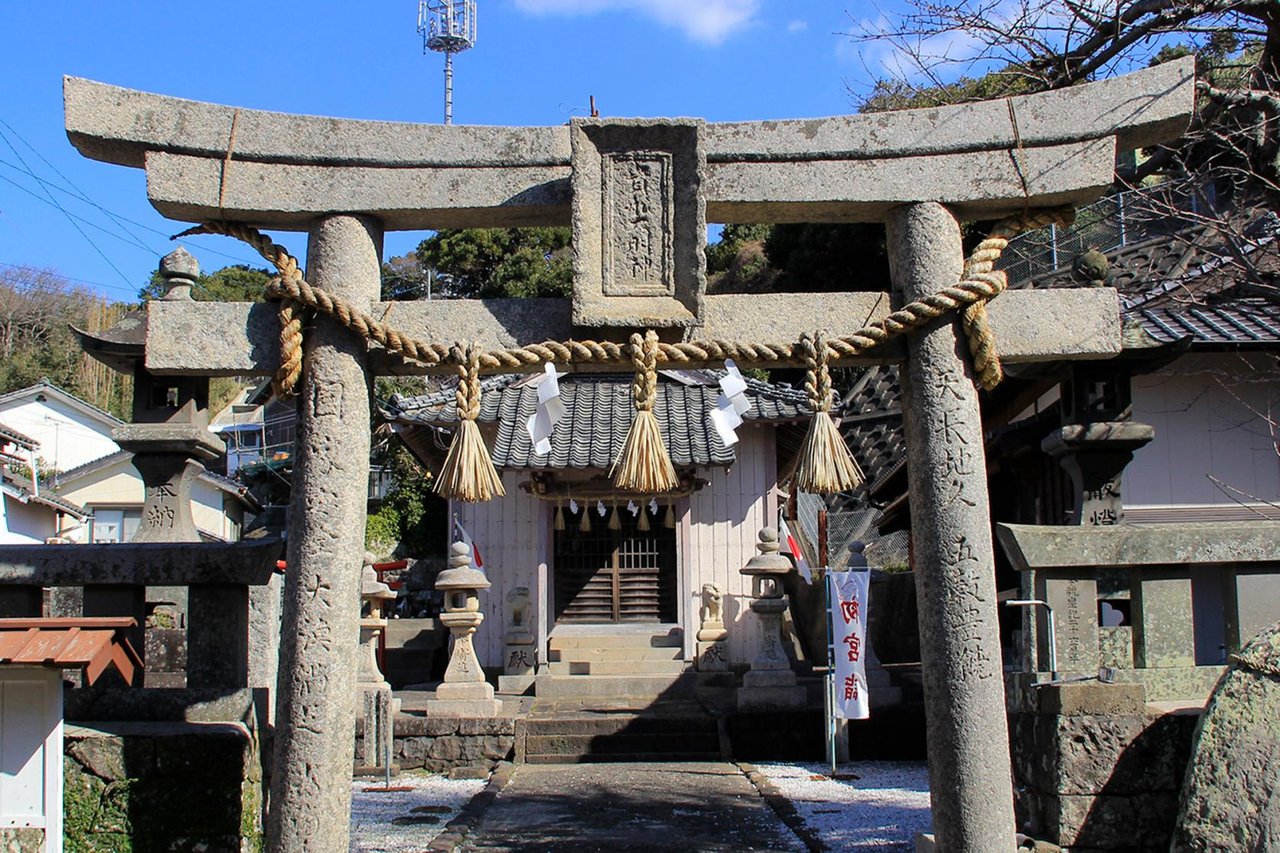
Enshrines Takaokami. The annual festival includes an offering rite and a procession.
Kurosaki Battery Ruins
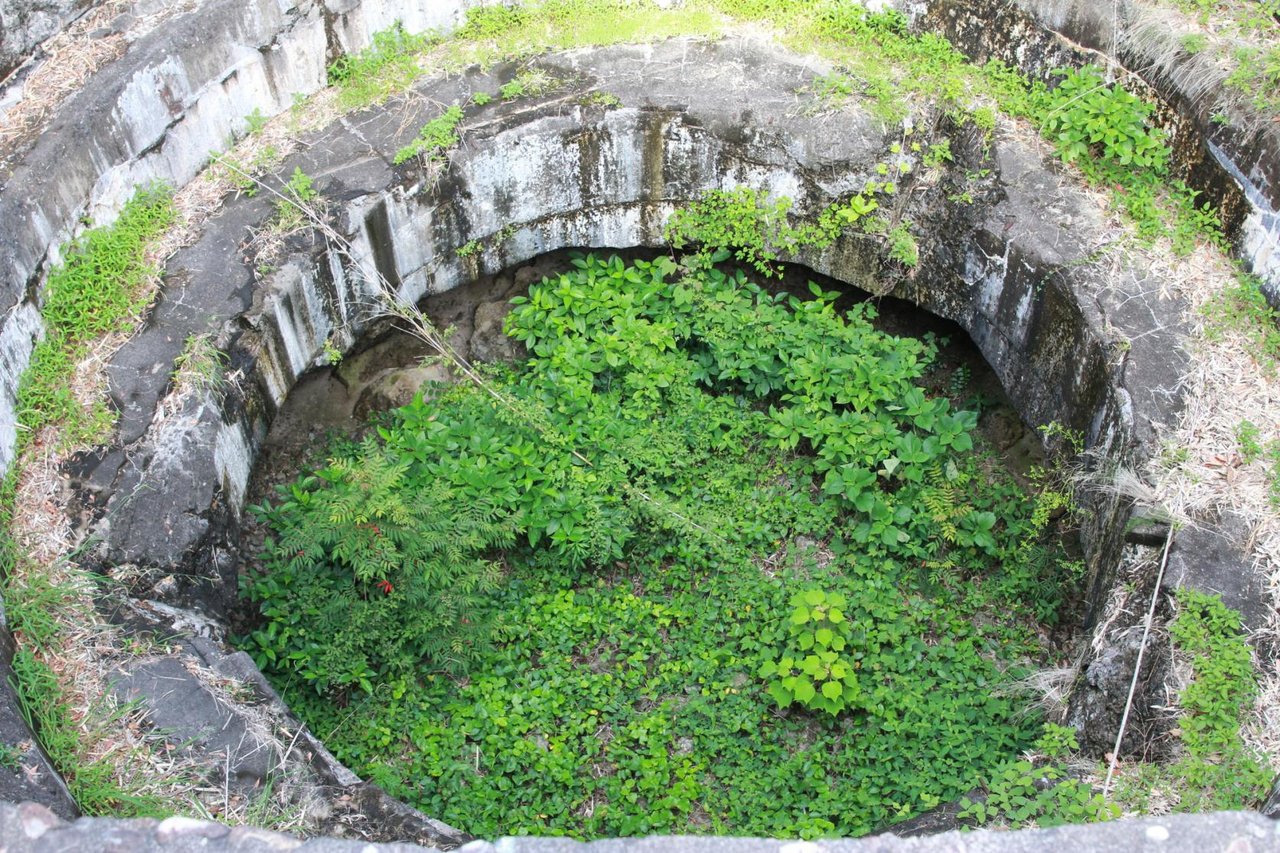
Huge battery ruins near Saruiwa, completed in 1933 with two 41cm cannons using main guns from the battleship Akagi.
Sui Shrine
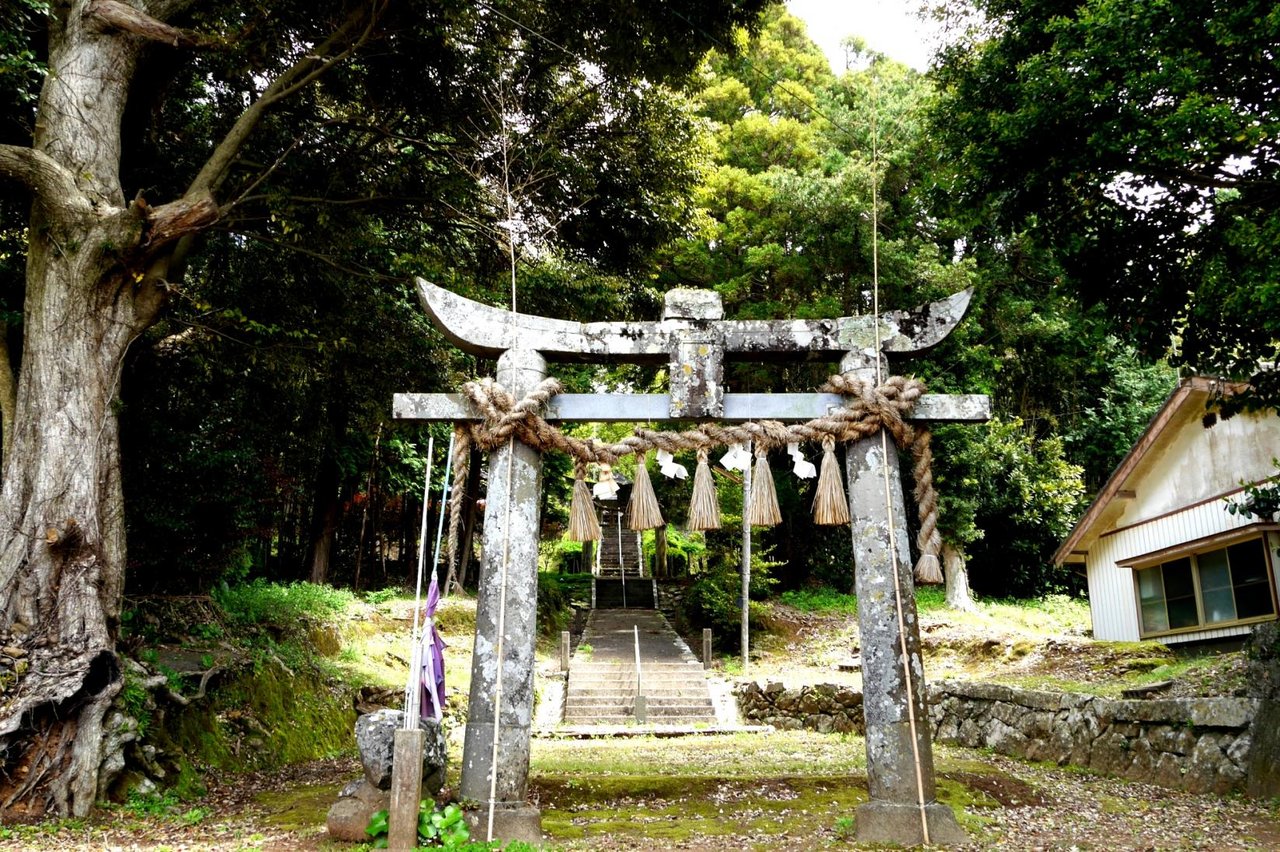
One of Iki's 24 Engishiki shrines. Enshrines Hayaakitsuhi and Sugawara Michizane. Annual festival is November 25.
Togami Shrine
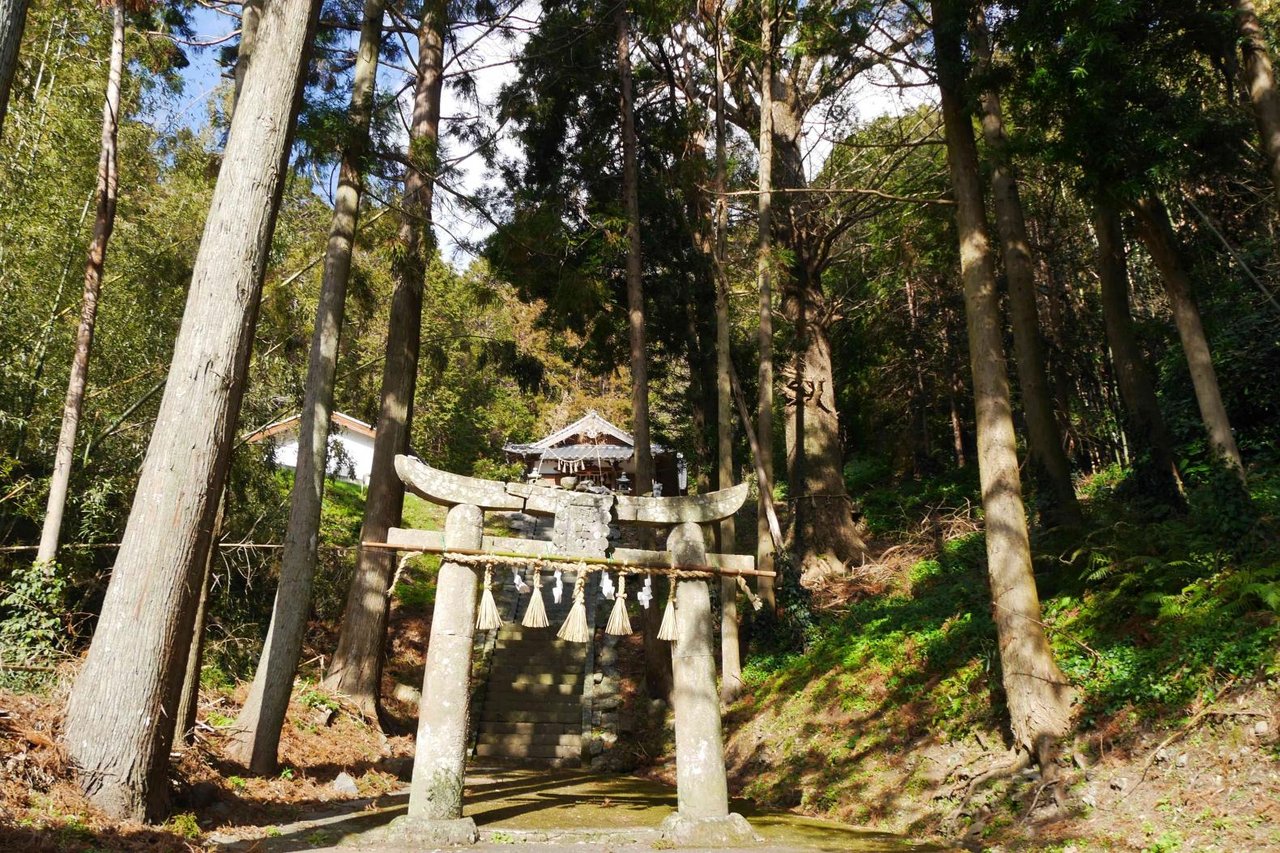
Enshrines Susanoo and two other deities. Annual festival is October 26, with a procession and ritual dance.
Iki Shrine
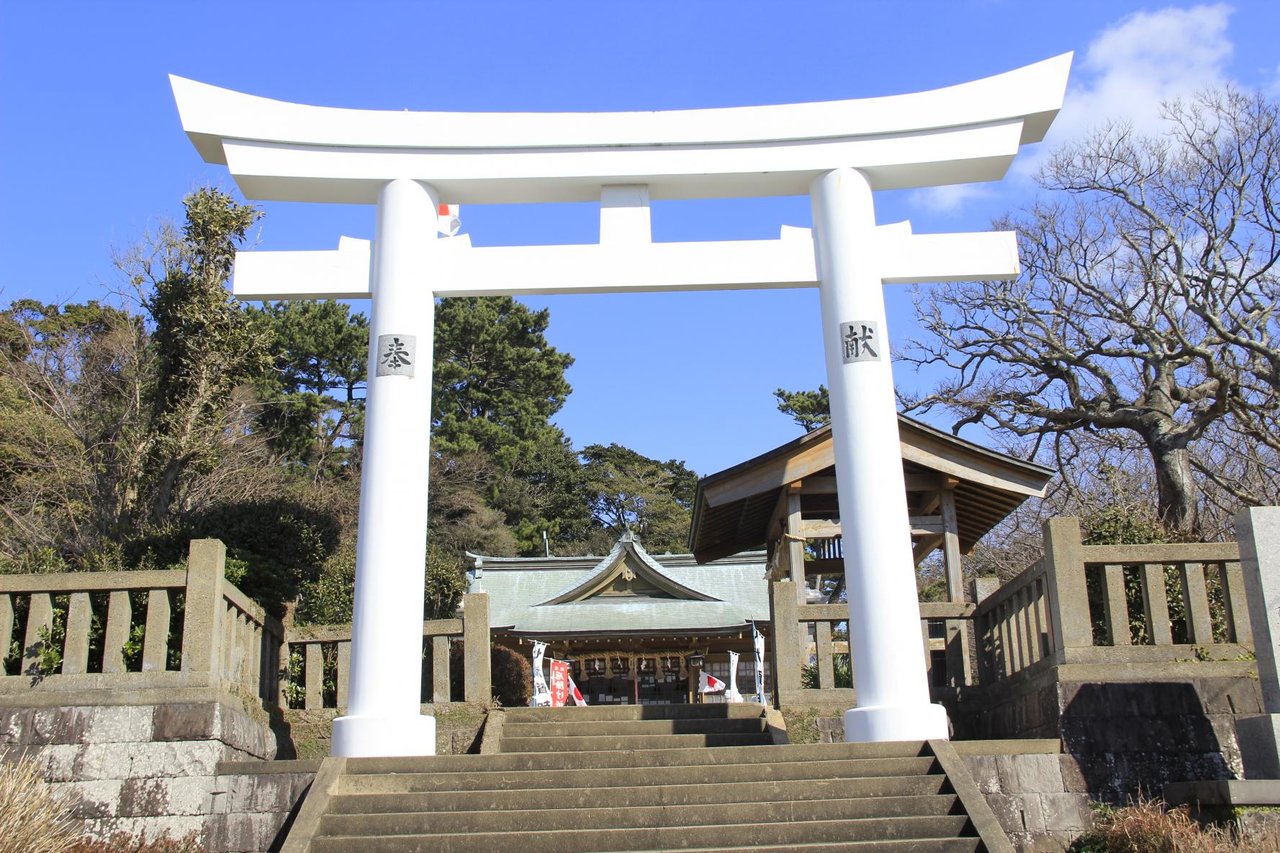
Iki's newest shrine, main hall built in 1944, dedicated to Shoni Suketoki who died in the 1281 invasion.
Ishida Tenman Shrine
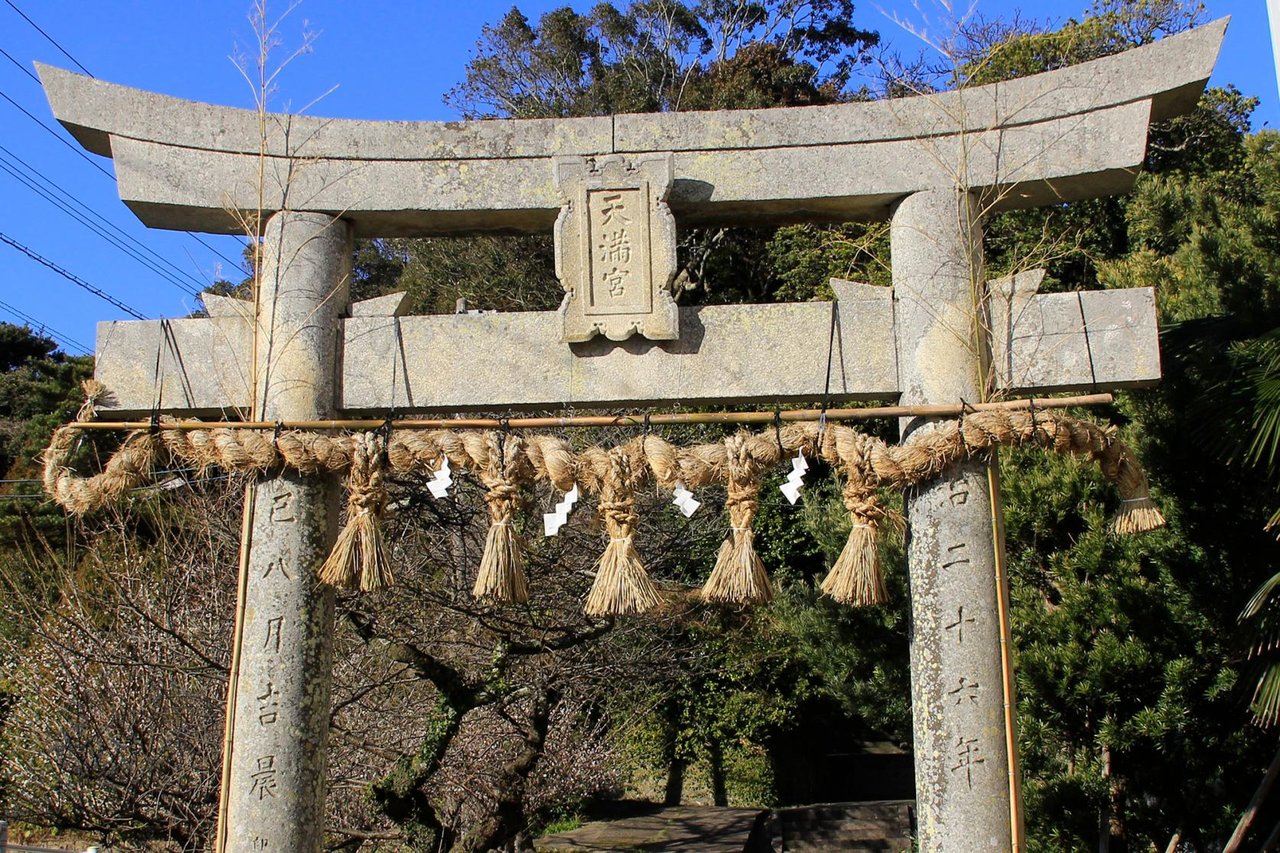
Enshrines Sugawara Michizane and four other deities. Annual festival on October 25 includes a procession and ritual dance.